
The World Hiding in Plain Sight
A conversation with birder Michelle Toth about curiosity, community, memorable encounters, and the moments that turn a growing interest in birds into something much deeper. From Snowy Owls on winter roads to a long-awaited Barred Owl in the woods, this story is about learning to notice more, look closer, and discover the remarkable world that has been there all along.
A conversation with Michelle about curiosity, Snowy Owls, and learning to see more of the world around us
One of my favourite things about birding is that nobody seems to arrive here in quite the same way. Some people can point to a single bird. Birders sometimes call it a “spark bird,” the bird that turns a casual interest into something much harder to shake.
I have one of those myself. My interest in birds was already growing when Red-headed Woodpeckers began regularly appearing at the feeders on my father’s farm. They were hard not to notice. Brilliant red heads, clean white bodies and those bold black-and-white wings moving through a place that was already deeply familiar to me. There was something about seeing a bird that striking appear almost casually in the landscape around home. I already wanted to know more about birds, but those woodpeckers poured fuel on it. They made me pay closer attention, and once you begin paying attention to birds, the world has an unfortunate habit of becoming much larger.
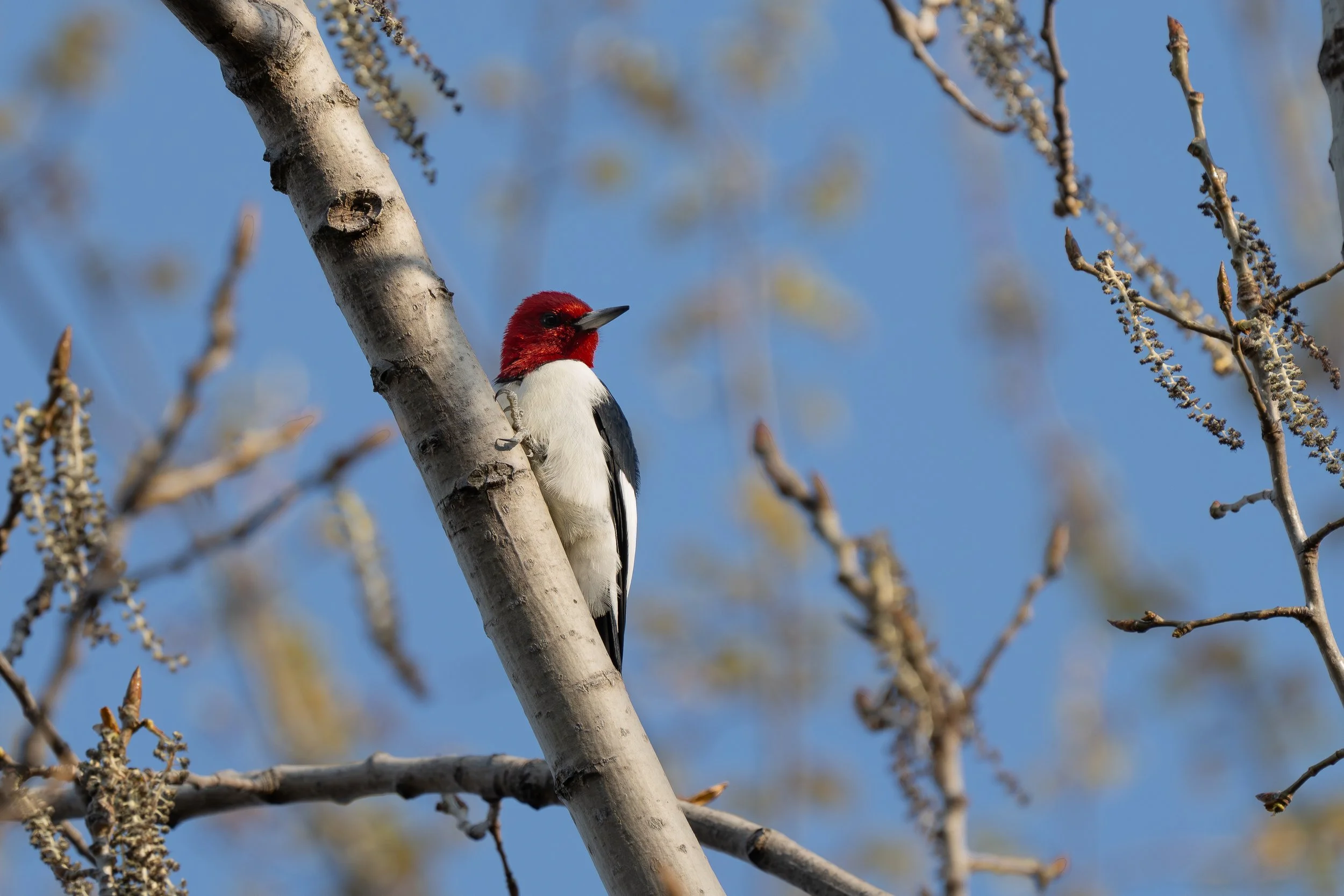
Red-headed Woodpecker - Long Point - May 2026
A field stops simply being a field. A stand of dead trees becomes worth scanning. A little patch of wetland beside the road suddenly has possibilities. You start hearing things you somehow never noticed before. That curiosity is part of what eventually led me here, and it is something I think about often when I am guiding.
I spend a lot of time talking about birds, but I am equally interested in why other people care about them. What was their beginning? What keeps bringing them outside? What did they notice today that they might not have noticed a year ago? These are questions I like asking people I bird with, whether they are completely new to birding or have been doing it for years.
Michelle has joined me for several Avitura outings now, and over that time I have watched her own relationship with birding continue to grow. She is curious, enthusiastic, observant and always interested in understanding a little more than simply what species is sitting in front of us. So I asked her some of the questions I often find myself asking participants. Her answers made me laugh in places, made me think in others, and captured something about birding that I think many of us recognize.
Where did your connection with birds and the natural world begin?
This is one of my favourite questions to ask because the answers are almost never really about birds alone. Sometimes they begin with family, sometimes insects, fishing trips, camping, a grandmother’s garden, or a pair of binoculars handed down. Sometimes there is no identifiable beginning at all. Nature was simply always there.
Michelle’s answer felt very much like that.
“It’s hard for me to put my love for nature into a specific timeline! I was always drawn to animals and the outdoors when I was a kid, and my family fostered that love. I was really easy to please– you could have thrown me into a sand pit and I’d go looking for ants and beetles for five hours. So, that also made the parenting part easier for them. You’re welcome Mom and Dad. My father and his side of the family have loved gardening for as long as I can remember, so some of my first memories with them are of crawling in dirt, chasing after butterflies that were much faster than me, and giggling at junebug grubs they tilled out of the ground. Like most children, I went through many stages of considering careers. I practically gave myself decision paralysis when I found out you could do so many hyper-specific things. I wanted to be an archaeologist, an entomologist, a marine biologist, and more all at once.
The concept of flight was something that I always found interesting. As a kid, I had dreams where I’d fly over cities and forests. I’ve always been fond of butterflies and dragonflies, the mechanics of airplanes, and anything else that includes flying. (One of my favourite movies, which I’d force my dad to play on repeat every single night, was the Bee Movie.)
Alongside flight, I have always loved sound. Everything is music to me, and it has been for as long as I can remember. As a musician now, studying birdsong is one of my favourite aspects of birding!
My love for birds came quite naturally with all that groundwork. When I got my first camera, the Red-winged Blackbirds at a creek near my grandparent’s place were one of my first subjects. They were boisterous and displaying all the time; pretty easy compared to the secretive birds I seek now. Watching them fly and hearing their alien song was the best.
Then, we took care of a quaker parrot named Bean while her owner, a family friend, was on vacation. I loved her. She danced when you said “tuk tuk” and she loved bathing in her water bowl. What I had a hard time appreciating is that she had an inner alarm clock at five in the morning, and would scream until she was let out. She was a wonderful, territorial bird, and she made me realize how much I wanted to see them out in the wild instead. Partially because of the alarm clock I couldn’t press snooze on, and partially because birds deserve a big space to explore.
So many other experiences and people led me to where I am now, completely taken with birds!”
I love that there is no neat beginning. There are ants and beetles, butterflies, gardening, music, flight, and a very enthusiastic parrot named Bean. Then, somewhere in the middle of all of that, Red-winged Blackbirds begin appearing through a camera lens. That feels much closer to how a love of nature actually develops.
Before I knew migration routes, ageing characteristics, habitat associations, molt patterns or any of the other things that eventually occupied an unreasonable amount of space in my head, I was simply interested. I wanted to know what I was looking at. Then I wanted to know why it was there, where it went, and what else might be nearby. One question has a tendency to produce three more, and that curiosity is still probably the thing I value most in naturalists. Expertise comes later. First, you have to care enough to look.
What does birding give you that other parts of life do not?
I ask variations of this question fairly often. Not because I think birding needs some grand justification, but because the answers reveal why people keep coming back to it. There are plenty of hobbies, but very few seem to change the way people physically move through the world.
Birders walk differently. We stop constantly. We listen. We look behind us. We stare suspiciously at distant fenceposts. We interrupt conversations because something chipped from a shrub twenty metres away. Somehow, all of that can also be incredibly calming.
Michelle described it this way:
“Birding never fails to take me out of the great stresses of life and put me into a focused, peaceful state of mind. So often I find myself reaching for activities that only really serve as a meaningless distraction, where when I go birding, I’m put into a space where I can clear my head completely and fill it with a mission to find cute birds instead. Along the way, I find my heart calming and my shoulders relaxing and my lungs filling with cleaner air. Another plus is that if I do an eBird checklist, it makes me feel like I’m helping science! There’s a lovely sense of community and togetherness that you don’t really see as much elsewhere. If someone has a set of binoculars or a camera in their hand, they immediately become approachable to another birder. Curiosity sparks merely at the sight of the equipment because we want to know what cool things might be around! Some people keep what they saw a secret (often because word travels quick and a rarity might be disturbed), but when they do share, it’s a tidbit of trust that melts my heart. We’re all living this life for the first time, and being able to share the big or little gems we find is what makes it all worth it. Too many people are glued to screens inside– and I find it hard to believe that people don’t hear birds outside. It’s just background noise to them, and that’s crazy to me. They’re oblivious to a whole world that is hiding right under their noses! That’s why the community means so much to me; many people are eager to share ”
That idea of a whole world hiding under our noses is really what this article became about for me. The birds were always there. When somebody becomes interested in birding, the landscape does not suddenly contain more life. What changes is what they notice.
A distant chip becomes something worth investigating. A dark shape perched at the top of a tree becomes a question. A flooded agricultural field becomes something you deliberately turn the car around to scope. You begin noticing that the same place can be completely different from one week to the next. There is something deeply satisfying about gradually becoming fluent in a landscape that previously seemed quiet.
Birding has also given me a community that I probably would never have found otherwise. I have met an extraordinary range of people because one of us happened to be holding binoculars. Sometimes that is genuinely all the introduction you need. “What are you seeing?” can be enough to turn two strangers into people sharing the same little adventure.
There are certainly complicated parts of birding culture, particularly around rare birds and the responsibility that comes with sharing sensitive information, but at its best there is an enormous generosity within this community. Someone points you toward a bird. Someone gives you a better angle through their scope. Someone explains a call you have been struggling with. Eventually, you get to do the same thing for somebody else. I have always liked that cycle.
Is there a moment from one of our outings that has stayed with you?
This is another question I like asking after tours. The answer is not always the rarest bird. In fact, it often is not. Sometimes it is a sound, a joke, a completely unexpected animal, a moment when something finally clicks, or simply the reaction of the person standing beside you.
Michelle and her dad joined me for a winter outing with a fairly specific objective: owls.
“I’ve gone on a number of birding tours with Brett, and I have good memories & laughs from each trip!
The first time I went, I had asked him to take my dad and I to look for Snowy Owls. My father has always loved owls, and every time we go out together, we look for them. The only luck we had before taking this tour was hearing some Great Horned Owls from afar one night. The tour was my Christmas gift for him!Brett helped my dad understand stuff at his level of birding, while also being able to nerd out with me at mine! What’s special about it was that both my dad and I took home new tips, tricks, and fun facts. For example, while we were out on the backroads, Brett did a really good job explaining the difference of a Snowy Owl’s white compared to the white of the snow. With some patience (and a tip from a birder who passed by), we were able to find some! The smile on my dad’s face when he saw the beautiful male sitting on the hill made it all worth it.
And, Brett is so generous! Not only did he help us find some owls that day, he helped us find some other winter species and set up his scope and offered up a field guide for us to look as well. It was really immersive, and every moment felt special to us.”
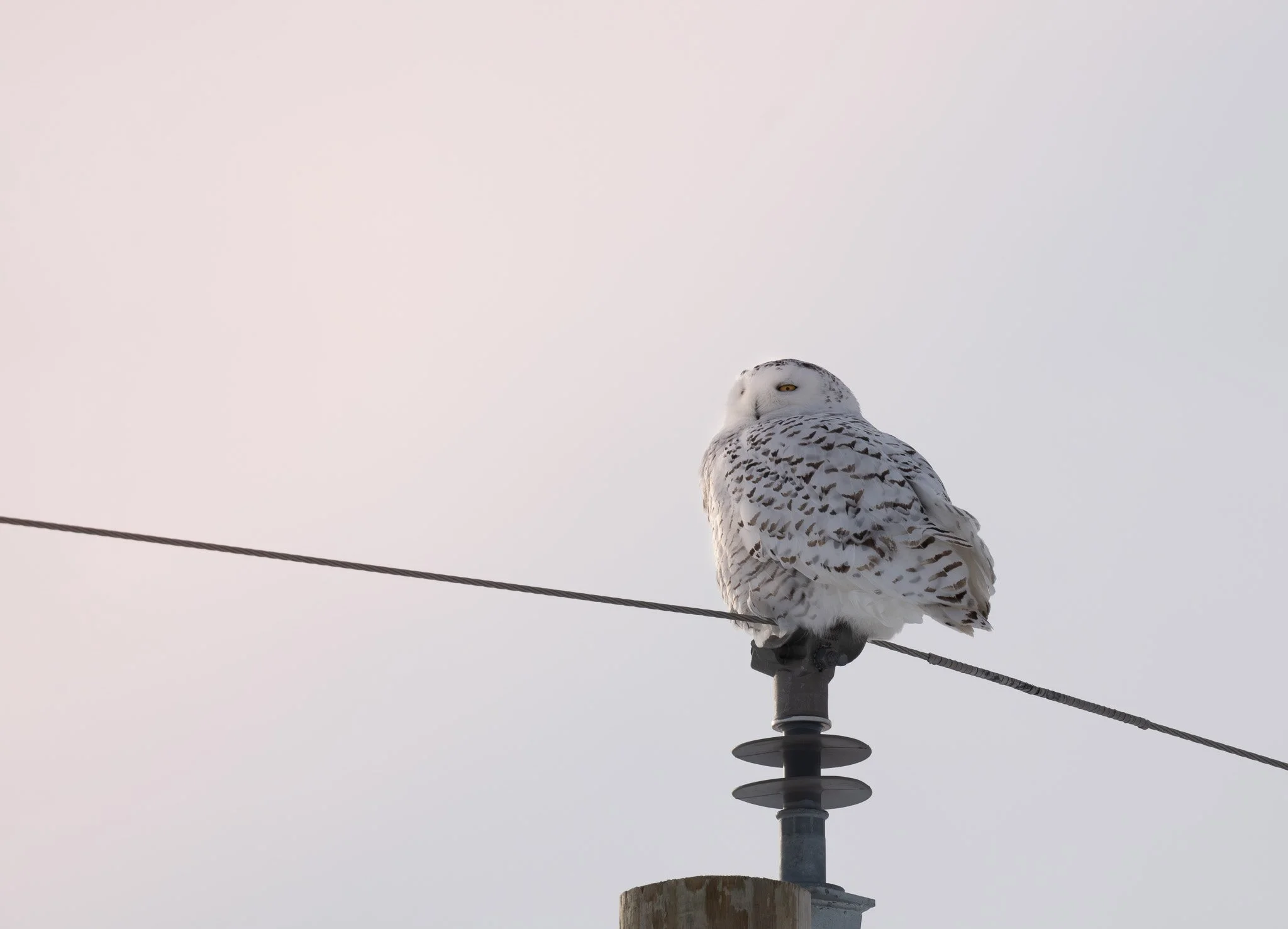
Beautiful female Snowy Owl observed with Michelle and her Dad.
I remember that first winter outing well. Snowy Owls are wonderful birds for teaching somebody how birding actually works because finding one is often less about knowing exactly where a bird is and more about learning how to see the landscape.
At first everything is white: snowbanks, fields, fenceposts, rocks, drifts. Then you start understanding that an owl’s white is not quite the same white. There is a shape to it, a texture, sometimes an almost imperceptible interruption in the landscape. You scan a hillside once and see nothing, then again, and then something changes. There it is. Once you see it, it suddenly seems obvious.
That transformation from invisible to unmistakable is one of my favourite experiences in birding, but what I remember most from that outing is not simply that we found a Snowy Owl. It is her dad seeing it.
Guiding gives you a strange privilege. You sometimes get to stand beside someone during the exact moment a bird moves from something they have hoped to see into a real animal sitting in front of them. That reaction never gets particularly old. A beautiful male Snowy Owl on an Ontario winter hillside is difficult to beat, but watching someone finally see an owl they had spent years hoping to find is better. That is a large part of why I enjoy doing this.
Has birding changed the way you see familiar places?
This may be the question that interests me most. Anyone can travel somewhere spectacular and be impressed by nature. What fascinates me is what happens afterward. Do you notice more when you get home? Does the roadside look different? Does winter feel different? Does that ordinary patch of forest suddenly seem worth exploring?
Michelle wrote:
“Finding new birds is always kind of a jolt to expectations. You might have some sort of idea of where they’re going to be, how you’re going to go find them, how you’re going to actually see them; and somehow it’s always just a little bit different. Plain sight for experienced eyes, but a door opened wide for an amateur’s!
One wild thing is just how much there is to explore in areas you might have already been through. The world is constantly changing and there is always more to nature that you can dig into. Sometimes that’s through another person. Even in the “dead” of a harsh Canadian winter, all sorts of critters are thriving. Learning this made winter feel less lonely. Taking a tour like this will make you realize just how much there is going on right under your nose!”
“Learning this made winter feel less lonely.”
That sentence has stuck with me.
We talk about winter almost entirely in terms of what leaves. Warblers disappear. Most insects vanish from view. Wetlands freeze. Trees lose their leaves. The chorus of spring and summer becomes quiet. But winter is certainly not lifeless. It is simply different.
Snow Buntings tumble across agricultural fields. Rough-legged Hawks arrive from the Arctic. Goldeneyes and mergansers collect wherever moving water remains open. Owls move through farm country. Woodpeckers become considerably easier to find. Tiny kinglets somehow continue existing despite weighing almost nothing and living in temperatures that make most of us reluctant to walk from the house to the car.
Once you learn what to look for, winter is no longer an empty season.
That is something I think about frequently when guiding. I obviously want people to see birds, but simply pointing at birds is not particularly interesting to me. I want someone to understand why we looked there, why that habitat matters, why that bird is here at this time of year, what sound gave it away, and what tiny clue separated it from everything else.
Because eventually I am not going to be standing beside them.
I would much rather have someone leave an outing knowing how to find their next bird than simply remembering the ones I found for them.
What would you tell someone considering their first guided birding experience?
I often ask participants some version of this because people who are new to birding frequently assume they need to reach some imaginary level of competence before joining other birders. They worry they do not know enough, that they will ask a stupid question, that everyone else will recognize things instantly, or that they somehow need to practise birding before they are allowed to go birding.
They do not.
Michelle had already spent time birding before we first went out together, but had not spent much time in the field with more experienced birders. Here is what she would tell someone considering it:
“I would highly recommend doing a birding tour with Avitura, no matter your skill level! Their genuine love for their roles as guides fosters such a sweet connection to nature, and their passion inevitably wears off on you. You get to be immersed in the moment while also having someone point out the things you might have missed.
I wasn’t new to birding, but I hadn’t really gone with anyone experienced until I took a chance and did the winter birding tour with my dad. It was nice to finally see where I was falling short in my understanding, and to finally meet some local birders. Brett has been helping me fill out my life list, which I am super grateful for!
If you’re completely new to birding but want to try it out, an Avitura tour is the perfect stepping stone into the hobby. It can feel daunting when you find out how much there is to learn, but when you have experienced people helping you in the right direction, you’ll make so much progress! There will always be so much to discover about what’s around you!
Oh, and bring appropriate clothing and footwear!”
I cannot really argue with that last point. Especially in Ontario. Bring good footwear, or, if you are crazy like me, just wear some Crocs.
One of my favourite examples of what Michelle is describing came on another outing when we set off in search of Barred Owls, a bird she had especially wanted to see. Part of what I remember so clearly is the walk itself: heading into the woods, listening carefully, scanning through the trees and knowing that, somewhere along the way, we might finally find the bird she had been hoping for. When we did, her excitement was immediate and completely genuine. That reaction is still one of my favourite memories from guiding her.
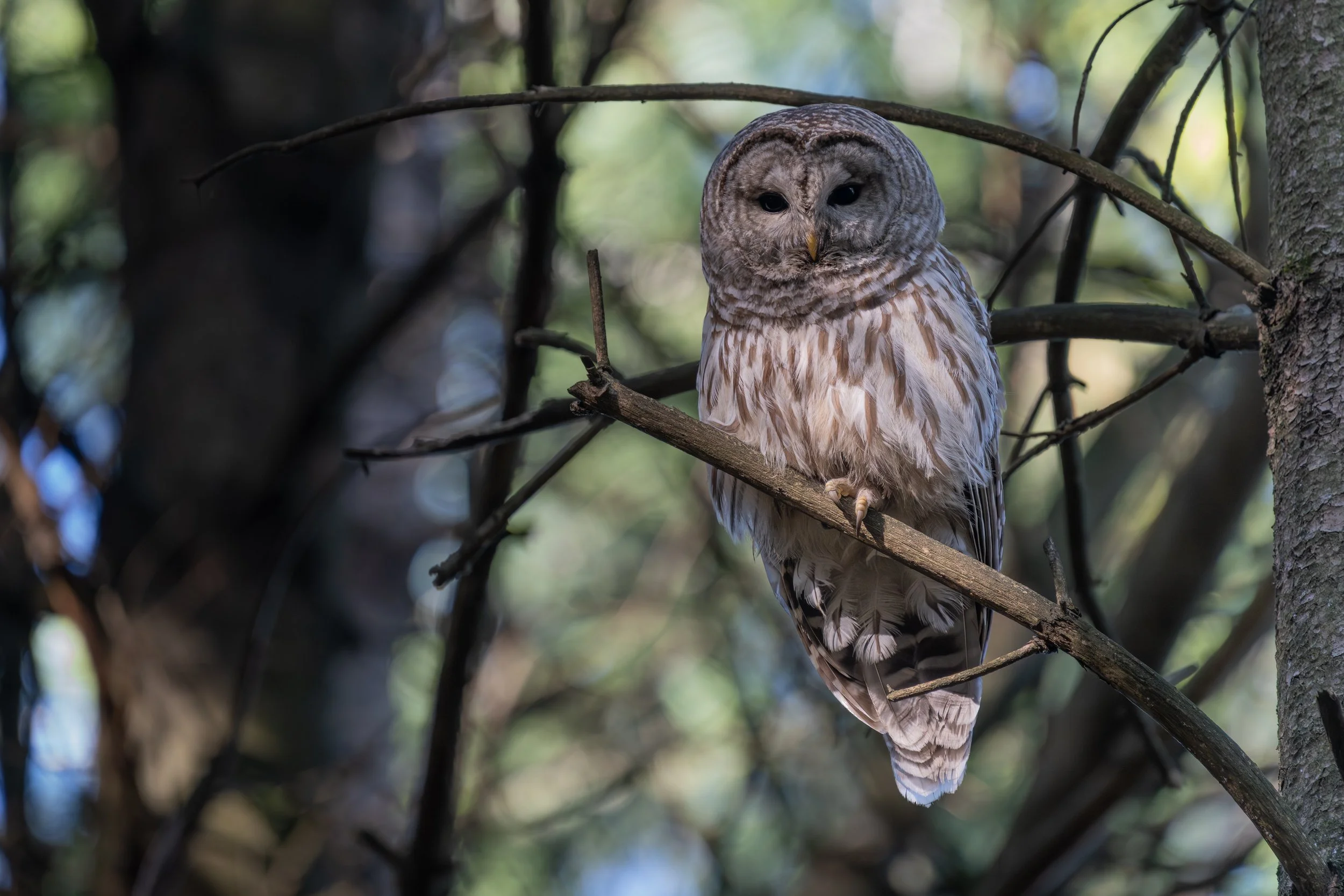
Barred Owl watched us quietly and close, while simultaneously scanning the forest floor for prey.
The bird itself was wonderful, of course, but seeing what that moment meant to Michelle was better. Genuinely, that is one of the best parts of guiding for me. I still love finding birds, chasing something unusual, adding species to a day list and seeing a bird I have not encountered in a long time. But getting to share that moment when someone finally sees a bird they have wanted for years adds something entirely different to the experience.
That is also why I do not think guided birding should be about demonstrating how much the guide knows. The goal is not to make someone feel like they are behind. It is to bring them into the process: why we are looking in a particular place, what we are listening for, what habitat might hold something interesting, and how to recognize the little clues that become obvious only after somebody has pointed them out once or twice.
There is something else running through all of Michelle’s answers that gets very close to what I want Avitura to be. Of course we go looking for birds. Life lists are fun. Rare birds are exciting. Finding something you have spent years hoping to see is one of the great pleasures of birding, and I still experience that excitement myself. But I do not think accumulating names is the most interesting thing birding gives us. The more important change happens in all the places between those birds.
A creek beside your grandparents’ place becomes somewhere Red-winged Blackbirds sing their bizarre, yet wonderful songs. A feeder on your father’s farm becomes the place where Red-headed Woodpeckers help push a growing interest toward something that will follow you for the rest of your life. A frozen agricultural field becomes habitat for an owl from the Arctic. A walk through the woods becomes the journey toward a Barred Owl that somebody has dreamed about seeing. A quiet stand of trees becomes several individual voices. A harsh Ontario winter starts feeling a little less empty, and a place you have driven past a hundred times can suddenly become somewhere worth exploring.
That is the part of birding I hope people carry home with them. Not simply the list from that morning, not simply the photograph, and not even necessarily the bird we were most excited to find. I hope something changes in the way they look, and that the next time they are outside, they notice one more sound, one more movement, or one more possibility than they would have before.
Because the extraordinary part of nature is that so much of it is not actually hidden. It has been there all along.
Sometimes we simply need somebody beside us to say, “Look there.”
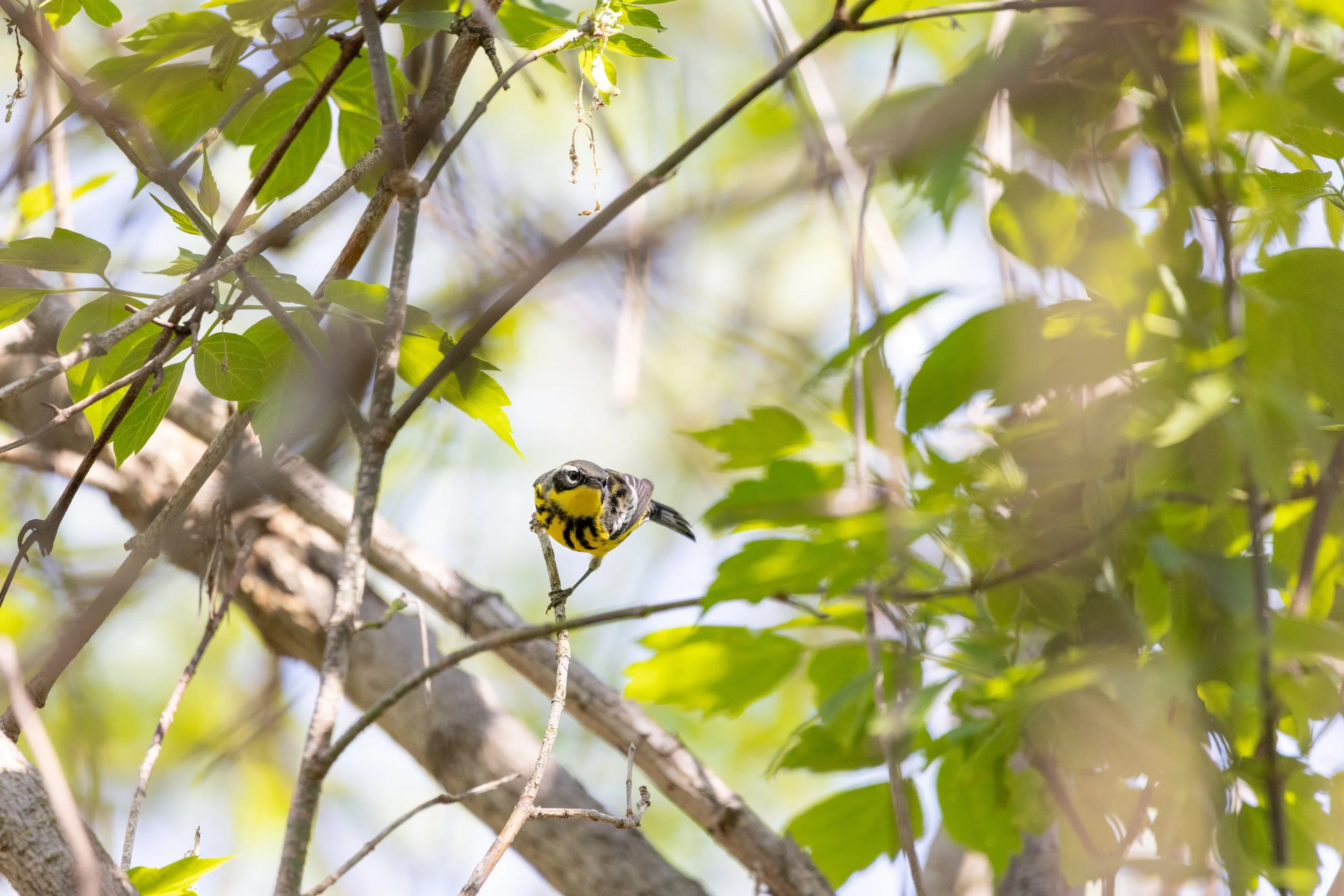
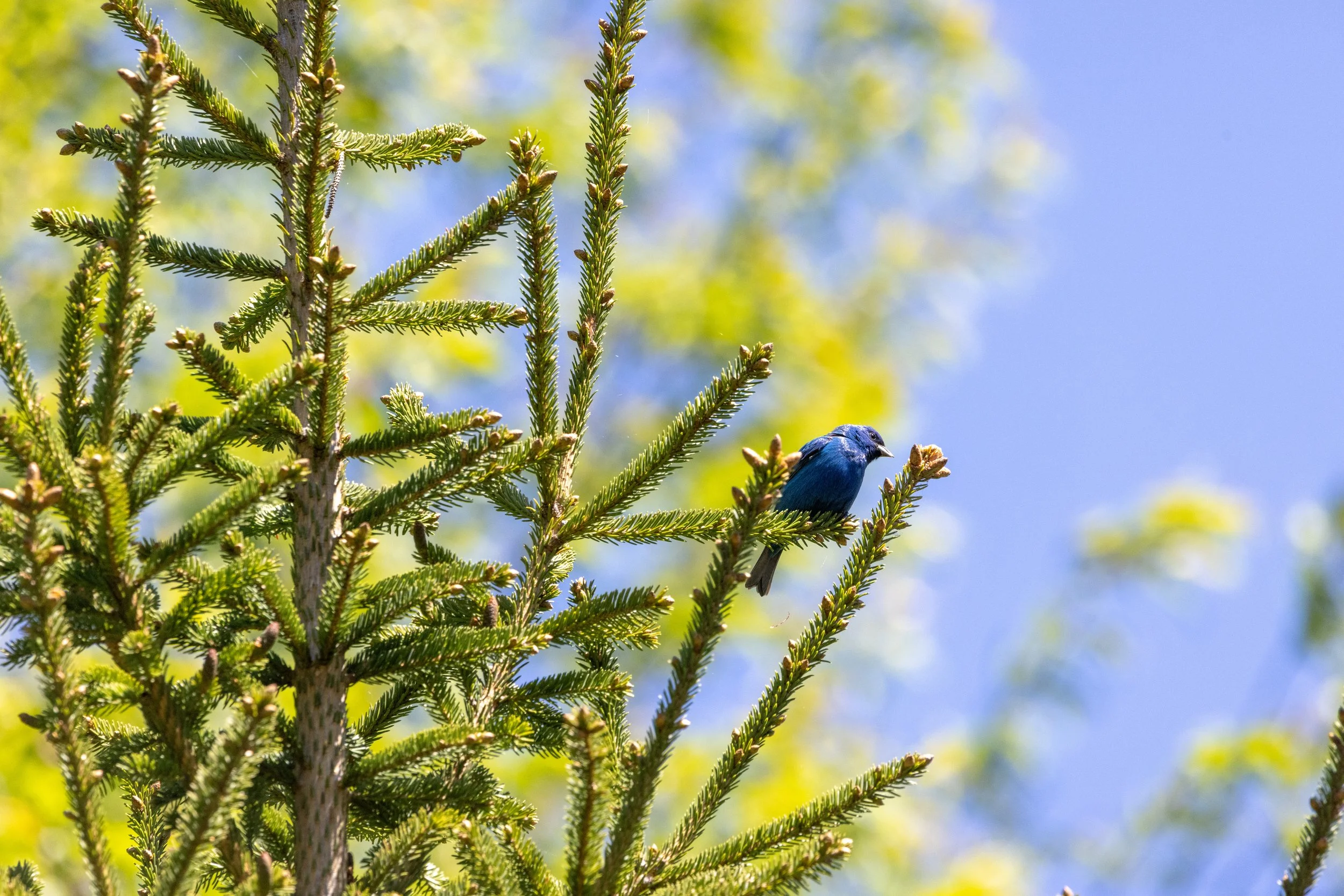
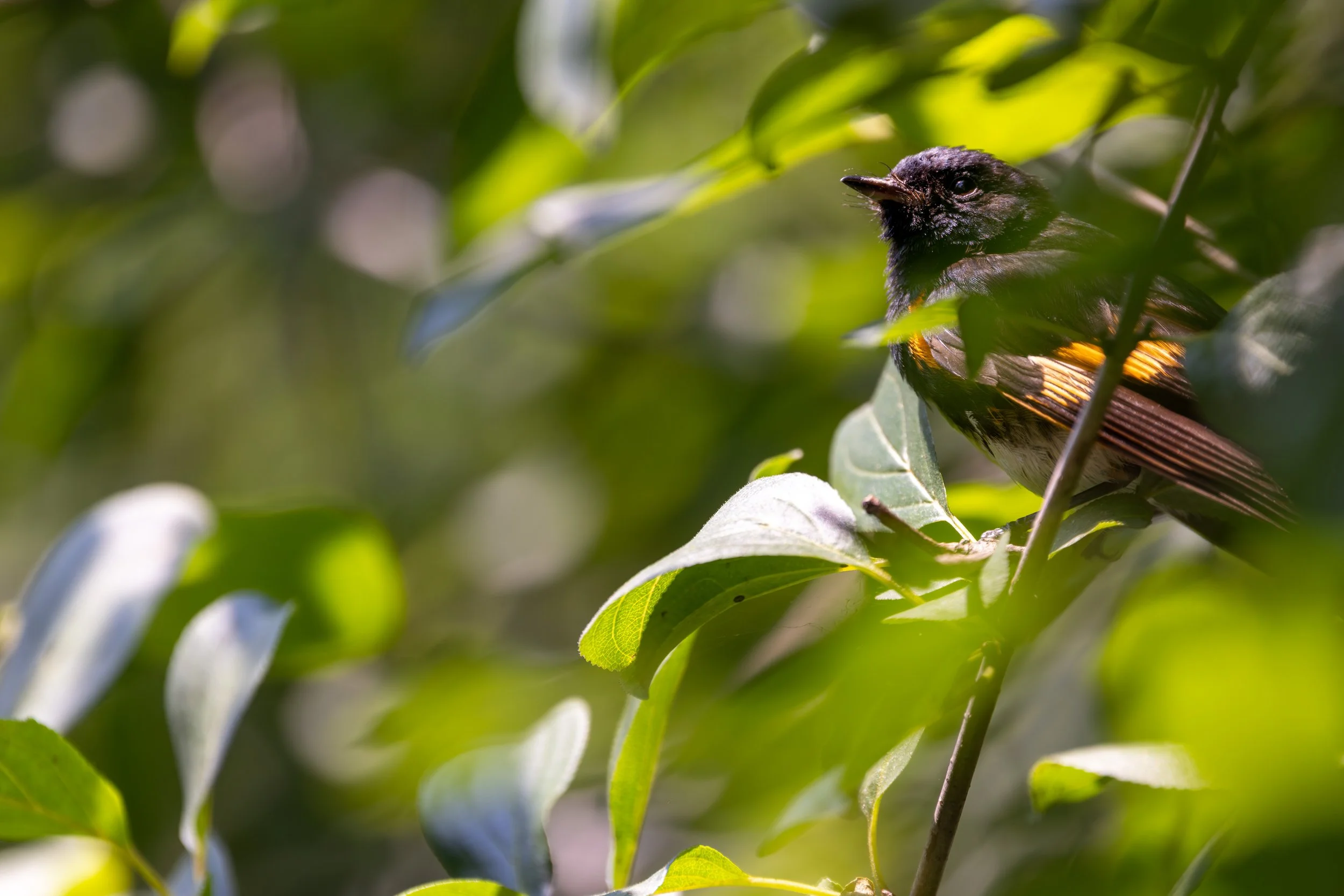
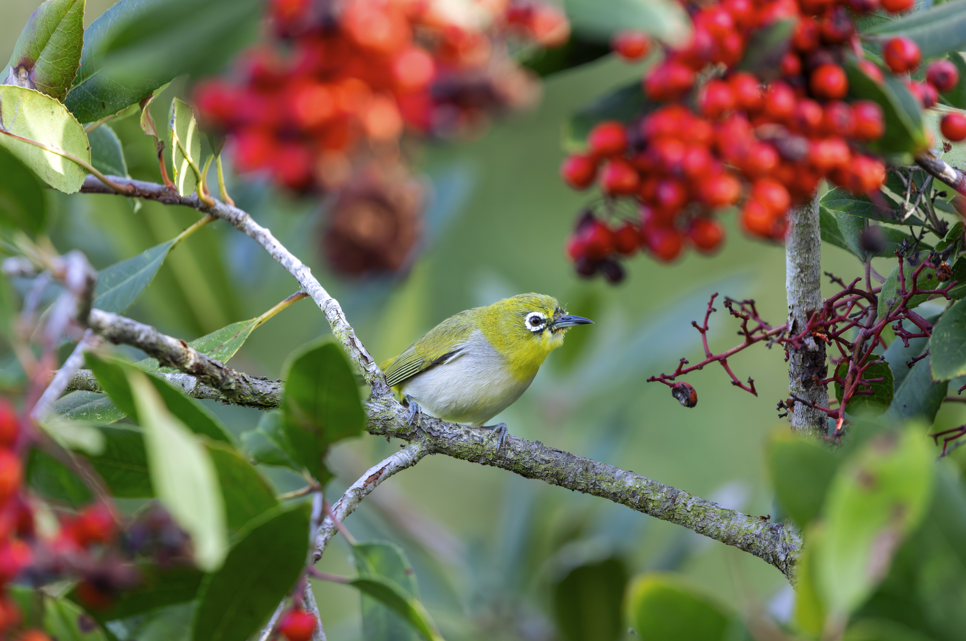
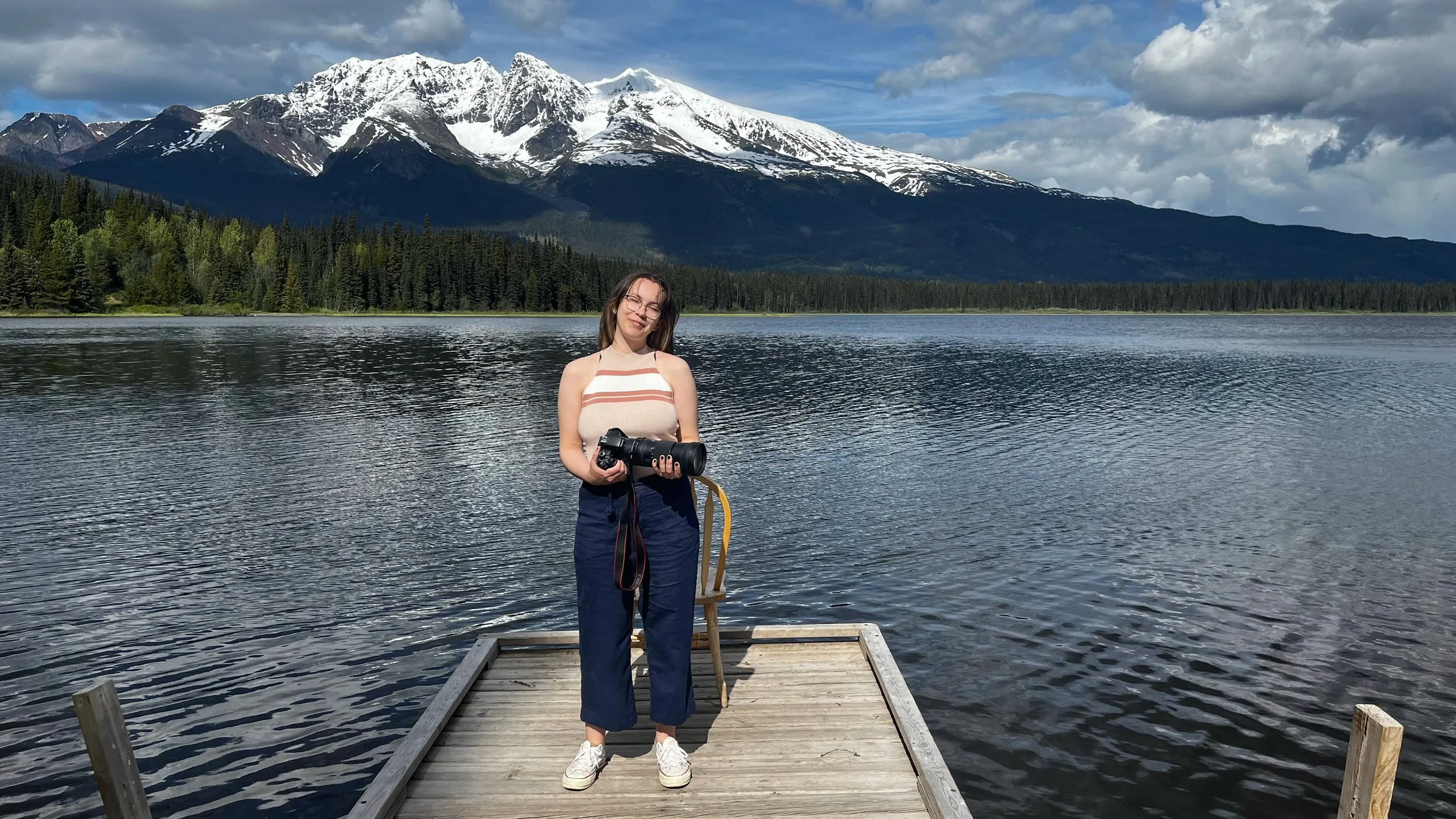
Photos by Michelle Toth, reflecting the curiosity and attention to detail that continue to shape her growing passion for birding.
More Than a Band: Teaching the Foundations of Field Biology
This summer at Hobbitstee, we have been introducing the next generation of biologists to bird banding, field biology, and the fundamentals of good research. While bird banding may be an old science, the lessons behind it remain deeply relevant: careful observation, consistency, animal welfare, thoughtful study design, and understanding why we collect data in the first place. For me, returning to a practice I once knew so well has also been an unexpected reminder of how meaningful it is to pass that knowledge forward.
This summer, we have been spending time with Hobbitstee’s students introducing them to bird biology and the science of bird banding. There is a lot to learn. From the outside, bird banding can look deceptively simple. A bird is captured, identified, measured, fitted with a uniquely numbered band, and released. But those few minutes with a bird in hand rely on a much deeper understanding of biology, anatomy, molt, ageing and sexing, behaviour, data collection, research methods, animal welfare, and, perhaps most importantly, judgement.
That is why we have been taking our time. The objective has never been to see how many birds we can process in a morning. We began instead with the fundamentals: safe handling, understanding stress, learning the anatomy of a bird, becoming comfortable with measurements, recognizing feather generations and molt, accurately recording data, and understanding why each piece of information is being collected in the first place.
There is a natural desire when learning something new to become quick at it. Bird banding teaches almost the opposite lesson. First, you learn to be careful. Then you learn to be consistent. Speed comes much later.
A bird in the hand is not simply an opportunity to practise a technique. For those few moments it is a wild animal entirely dependent on us to make good decisions. Learning when to slow down, when to ask for help, and when the welfare of the bird outweighs the value of another measurement may be some of the most important lessons we can teach. The students have been doing exceptionally well. There is still an enormous amount to learn, as there is for anyone beginning in this field, but it has been rewarding to watch their confidence grow and to see individual pieces of information gradually begin to connect.
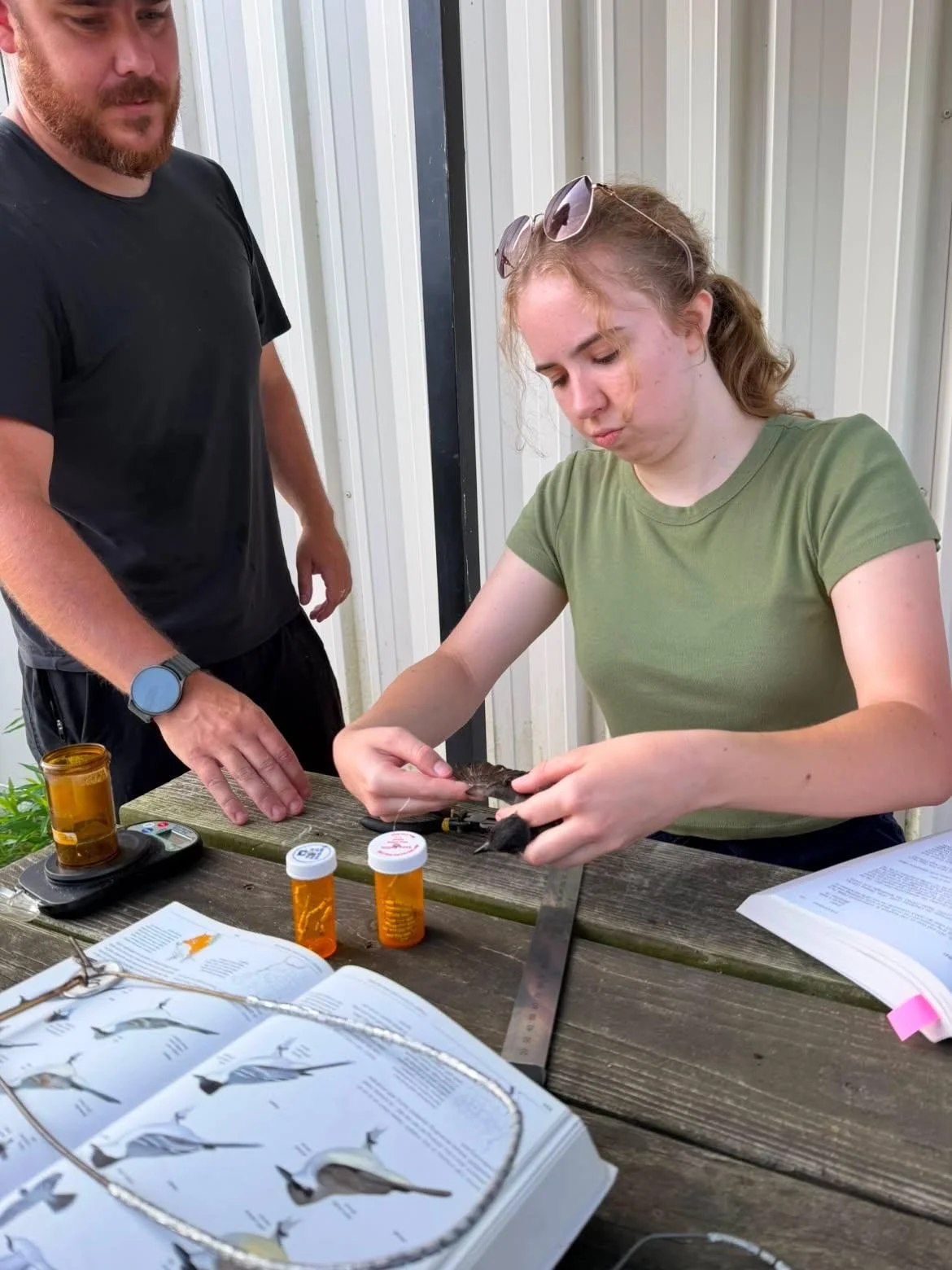
Hannah banding her first Eastern Kingbird.
What We Have Banded So Far
So far, the students have had the opportunity to work with 36 birds representing 12 species:
Song Sparrow -11
Gray Catbird -10
Common Yellowthroat -3
Least Flycatcher -3
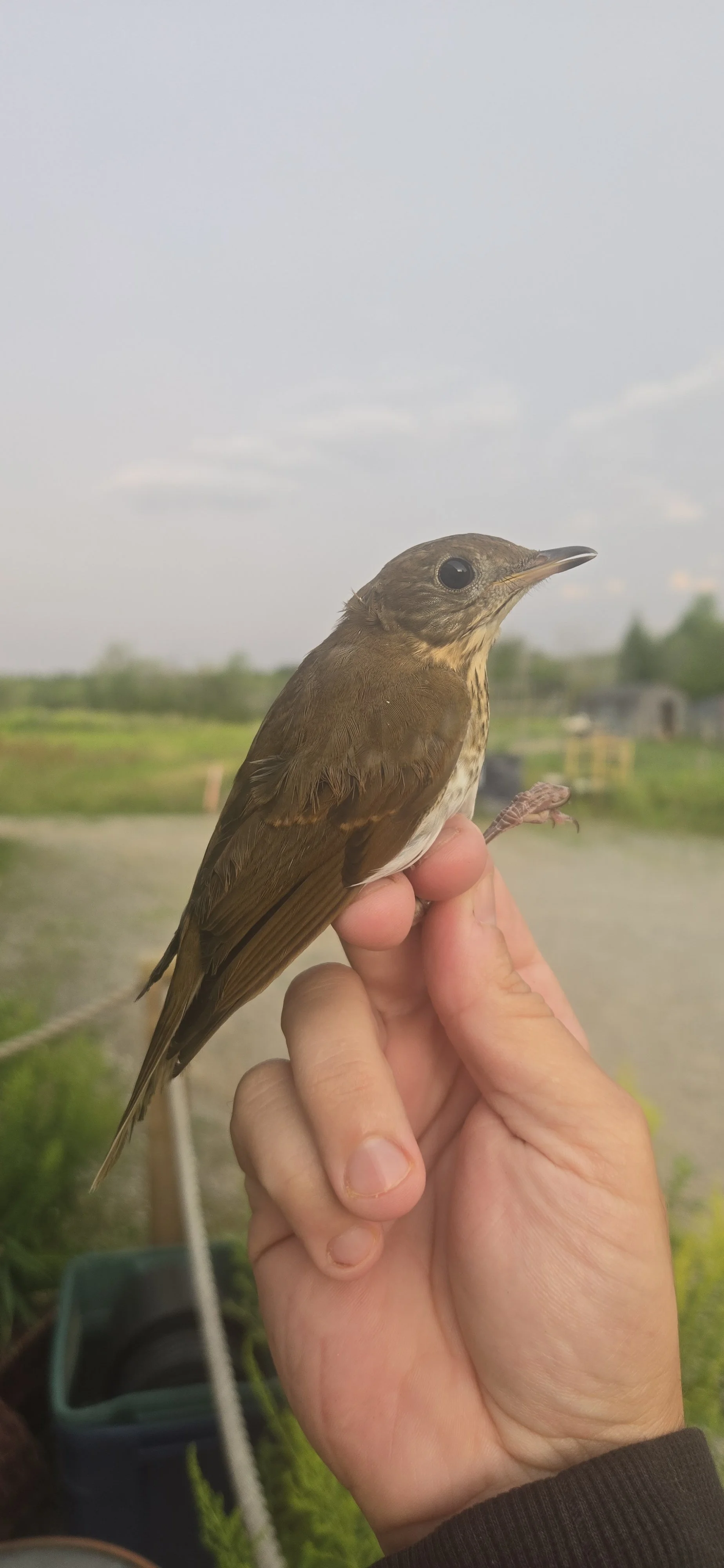
Veery -2
American Goldfinch -1
Eastern Kingbird -1
House Wren -1
Nashville Warbler -1
Northern Waterthrush -1
Rose-breasted Grosbeak -1
Swainson’s Thrush -1
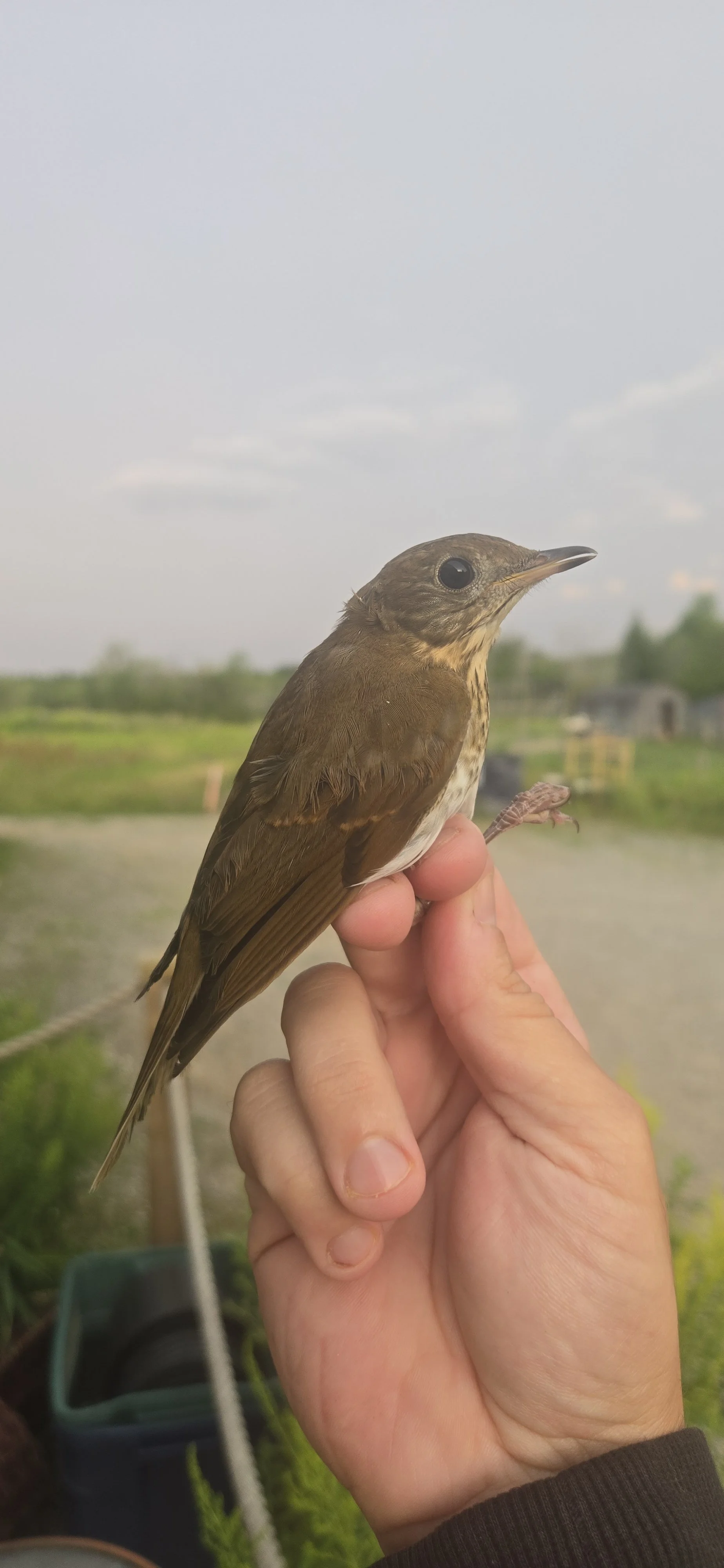
Veery
It is a modest number, deliberately so. At this stage, the value is not in accumulating hundreds of banding records. It is in having enough time with each bird to ask questions, look carefully, make mistakes under supervision, discuss what we are seeing, and understand how we arrived at a conclusion.
A Gray Catbird and a Song Sparrow may become familiar relatively quickly. A flycatcher asks different questions. A thrush presents another set of challenges. Then a Nashville Warbler appears, and suddenly the discussion shifts again.
Every bird adds another small piece to their understanding.
Is Bird Banding Still Relevant?
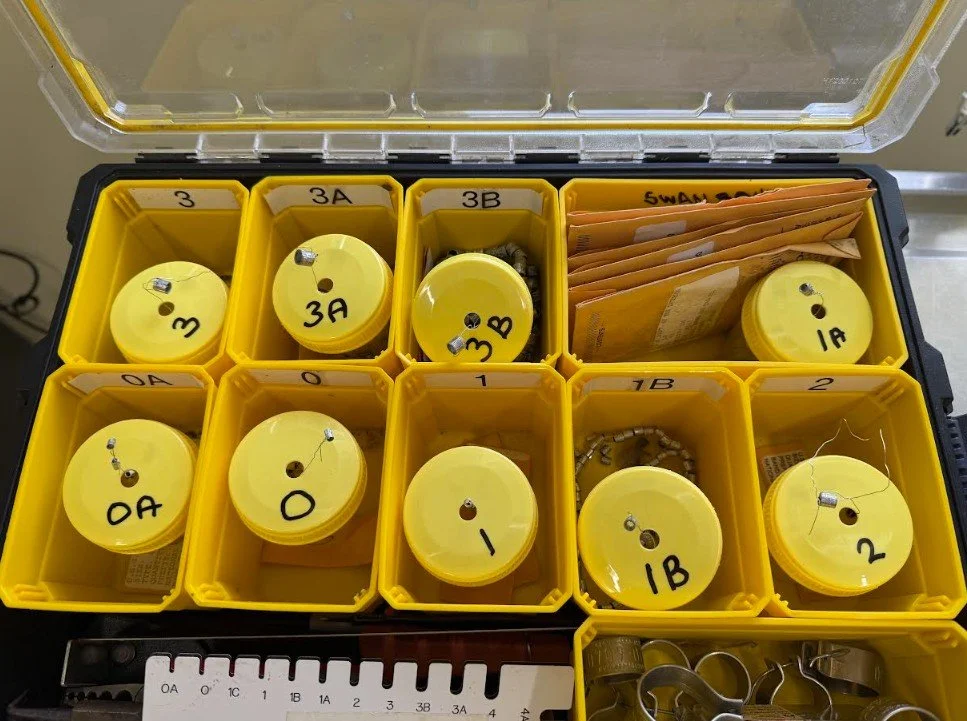
Our gear.
It is also worth being candid about bird banding itself.
Bird banding is an old science.
The fundamental idea has changed remarkably little in more than a century: band an individual bird, release it, and use information obtained later to learn something about its movements, survival, longevity, or population.
Modern wildlife research can now do things that the early pioneers of bird banding could hardly have imagined. GPS and satellite transmitters can follow individual animals across continents. Automated telemetry networks can detect movements without somebody ever having to recapture the bird. Acoustic monitoring, genetics, stable isotopes, remote sensing, and increasingly sophisticated analytical methods allow researchers to study wildlife at scales that conventional banding alone simply cannot provide.
For some questions, traditional bird banding is no longer the most effective tool. In some applications, it could reasonably be described as outdated. And I think there is value in acknowledging that rather than pretending otherwise.
But there is an important distinction between an old technique and an obsolete education.
Because beneath the physical act of placing a band on a bird are many of the fundamental skills on which good field research is built. Banding teaches you to observe carefully. It teaches you that data have to be collected consistently if they are going to mean anything later. It teaches you to understand variation between individuals rather than expecting biology to fit perfectly into a field guide. It teaches you to recognize uncertainty and to be comfortable saying, I don't know. It teaches you that every measurement should exist for a reason. And eventually, it forces you to ask one of the most important questions in science.
What are we actually trying to learn?
That question leads naturally into study design, sampling, bias, replication, data quality, animal welfare and, ultimately, whether the method you have chosen is capable of answering the question you started with. Those principles do not become obsolete when the technology changes. They are the building blocks of research.
Why We Are Doing This at Hobbitstee
That is really where this program begins to connect with the larger work at Hobbitstee. The goal is not to create banders simply for the sake of banding birds. We want to begin developing the biological and research capacity to ask better questions about the animals that pass through Hobbitstee's care. Wildlife rehabilitation necessarily focuses enormous effort on getting an animal to the point where it can be released. But release itself is not the end of the biological story.
What happens the following day?
A month later?
Does that bird successfully reintegrate into the wild? Does it migrate normally? Does it survive? Where does it go? Are there aspects of rehabilitation that influence those outcomes, and can what we learn ultimately help us make better decisions for future animals?
Those are much more difficult questions. Answering them will require more than bird bands. It will require thoughtful study design and, where appropriate, the integration of tools such as telemetry, tracking technology and other modern research methods. But before you can build good research, you need people who understand how biological information is collected in the first place. That is why we are starting here.
A bird in the hand. A set of measurements. A question. A hypothesis. A carefully recorded observation.
The fundamentals first.
The larger questions can grow from there.
Coming Back to It
There has also been a more personal side to this summer that I did not entirely expect. There was a period of my life when bird banding was almost second nature to me. I spent countless hours around mist nets and banding tables and handled thousands of birds. Eventually, my work moved in other directions, and it had been years since I had regularly done some of this. Coming back to it has, at times, felt strangely foreign.
There are things I once did almost without thinking that I now catch myself consciously working through again. A feather pattern I know I recognize but have to search my memory to place. An ageing criterion that feels familiar long before I can remember exactly why.
Then, little by little, it comes back.
The way a particular species feels in the hand. The subtle differences between generations of feathers. The reasoning that turns several small observations into an age determination. The rhythm of working through a bird carefully before opening your hand and watching it return to the trees. And with it has come the realization that I missed this more than I knew.
Perhaps what I have enjoyed most, though, is no longer simply doing it myself.
It is teaching it.
There is something special about watching somebody begin to see what you once had to be taught to see. A feather stops simply being a feather and becomes evidence of molt and history. A measurement stops being a number and becomes a piece of a larger biological question. A bird stops being only something beautiful in the hand and becomes a glimpse into migration, survival, ecology and a life that will continue almost entirely beyond our view.
None of us learn these things alone. I was fortunate to have people who took their time with me, answered countless questions, corrected my mistakes, and trusted me with knowledge they had spent years accumulating. Years later, I find myself on the other side of that exchange.
The bands we put on these birds may someday produce another record. Some may never be encountered again. But that was never the only thing we were putting into the field this summer.
We were passing knowledge forward. And if these students carry even some of it into their own careers as biologists, conservationists and researchers, that knowledge may ultimately travel much farther than any bird we band.
Summer Is Not Over, but Migration Has Already Begun
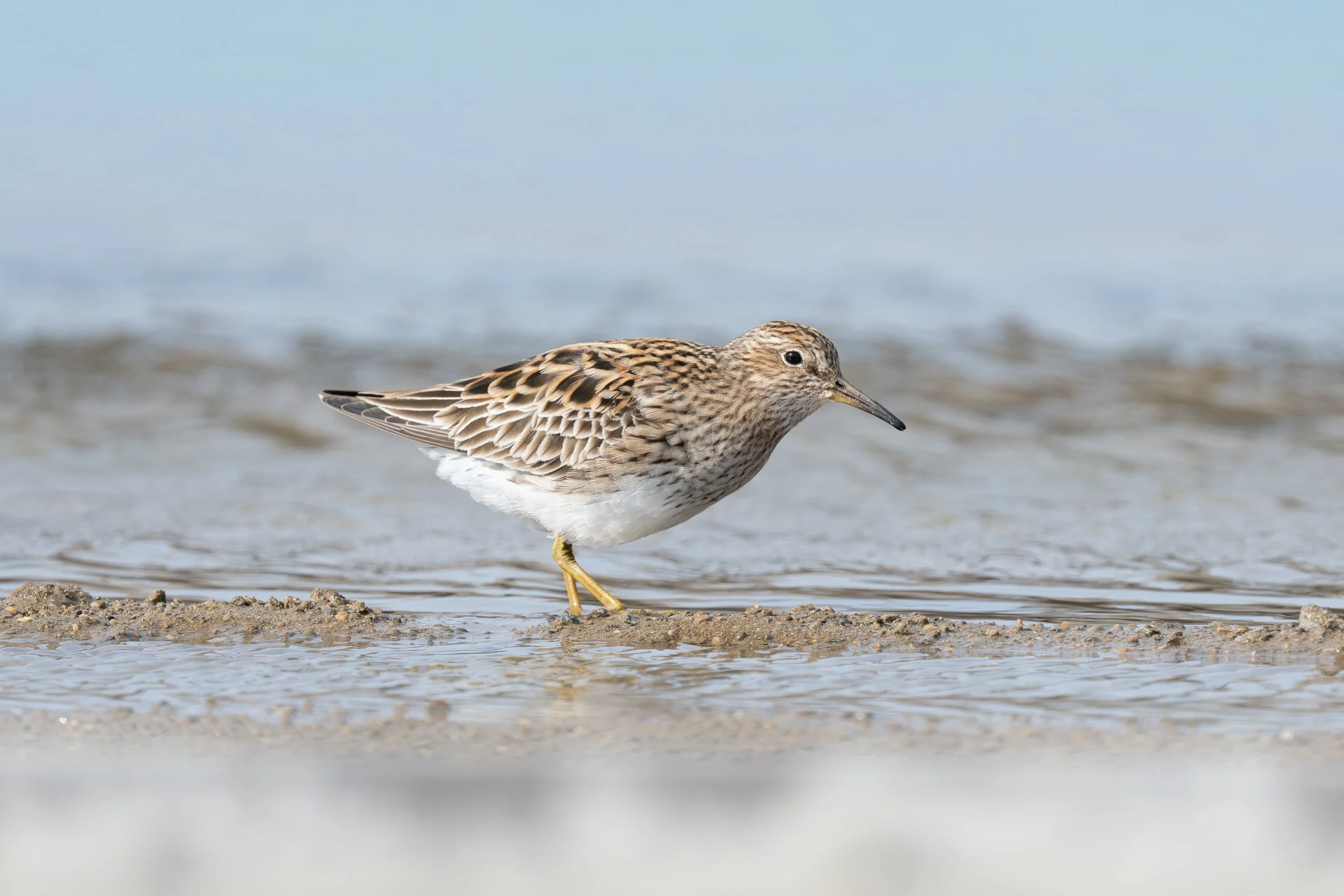
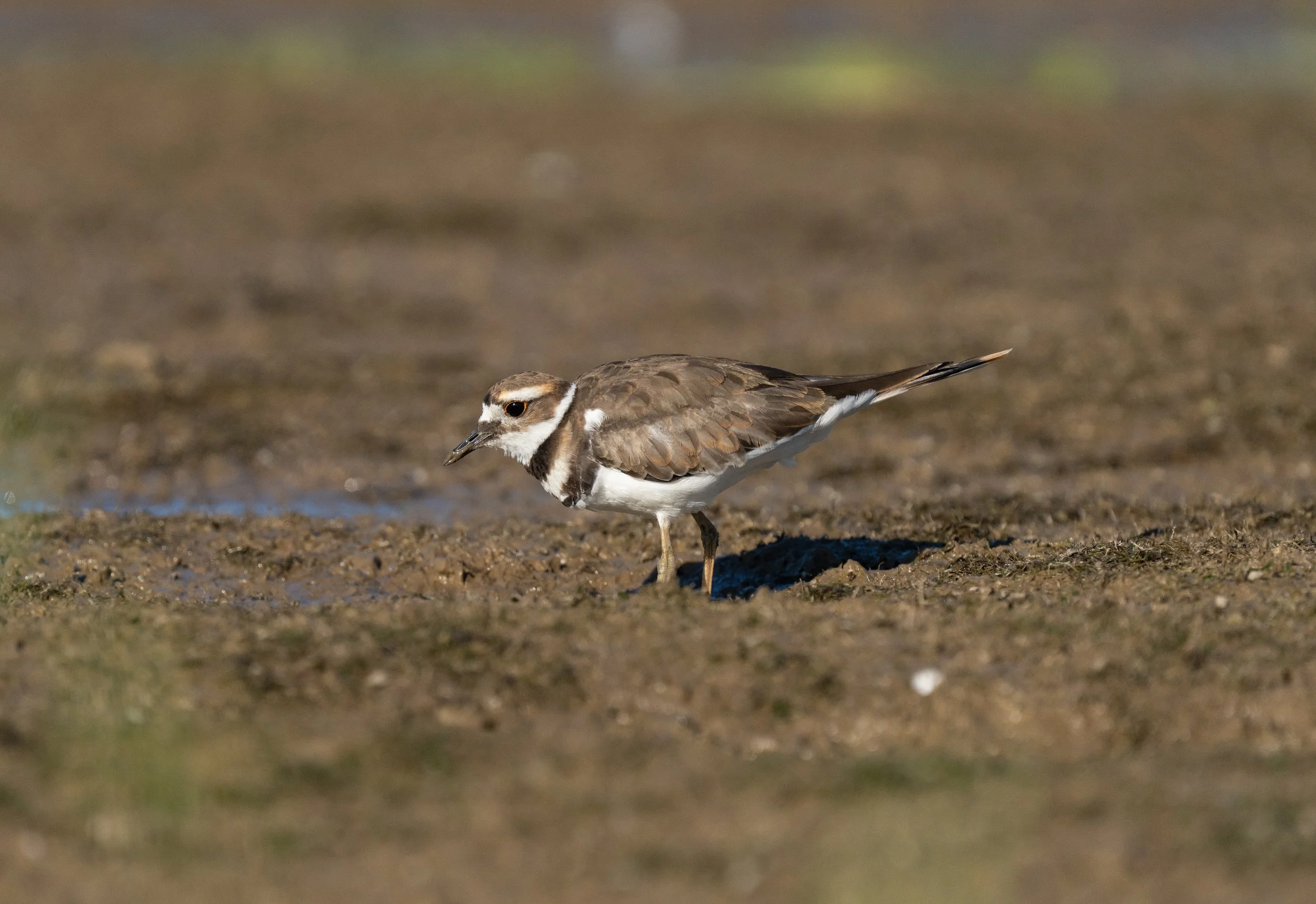
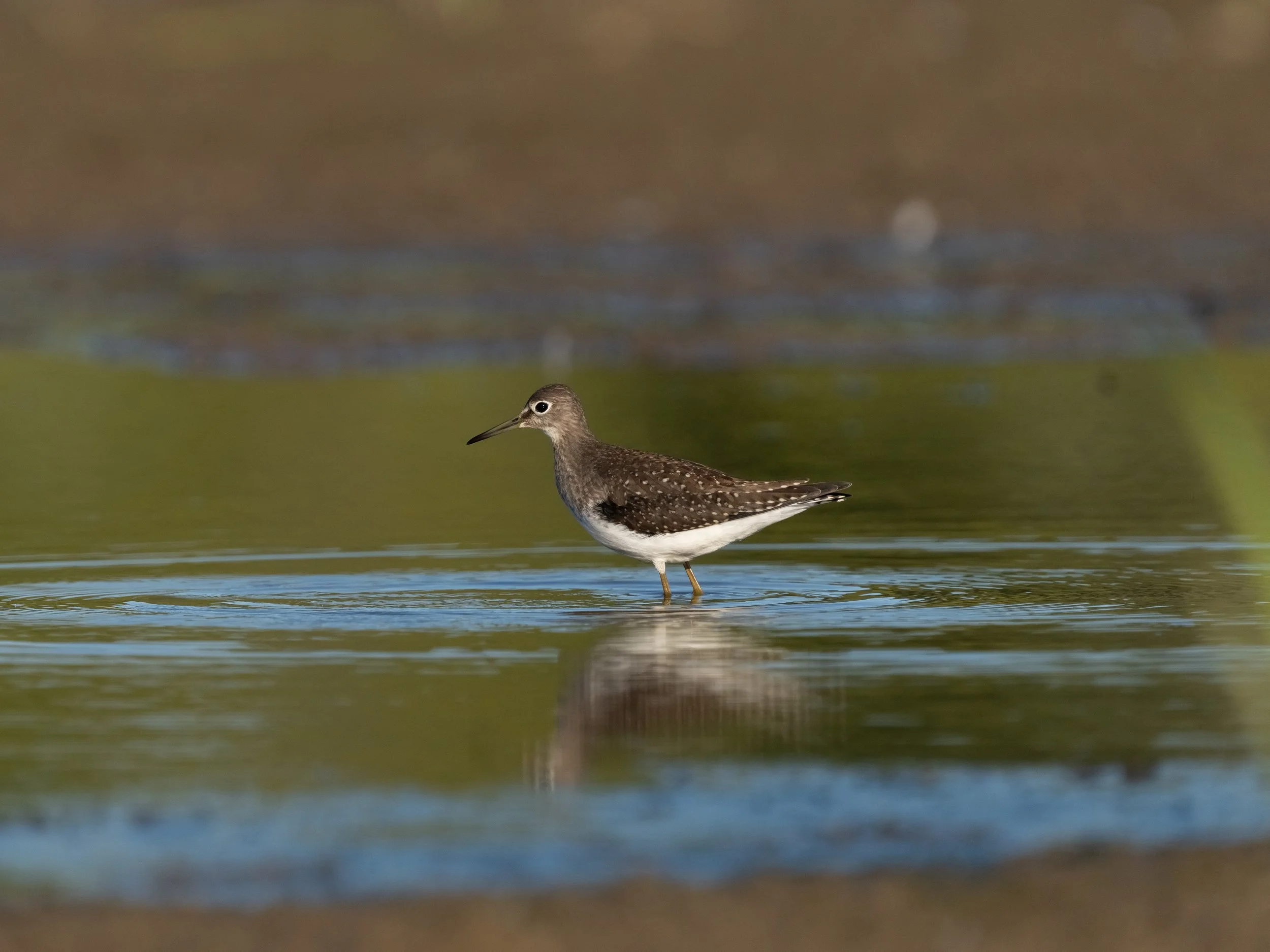
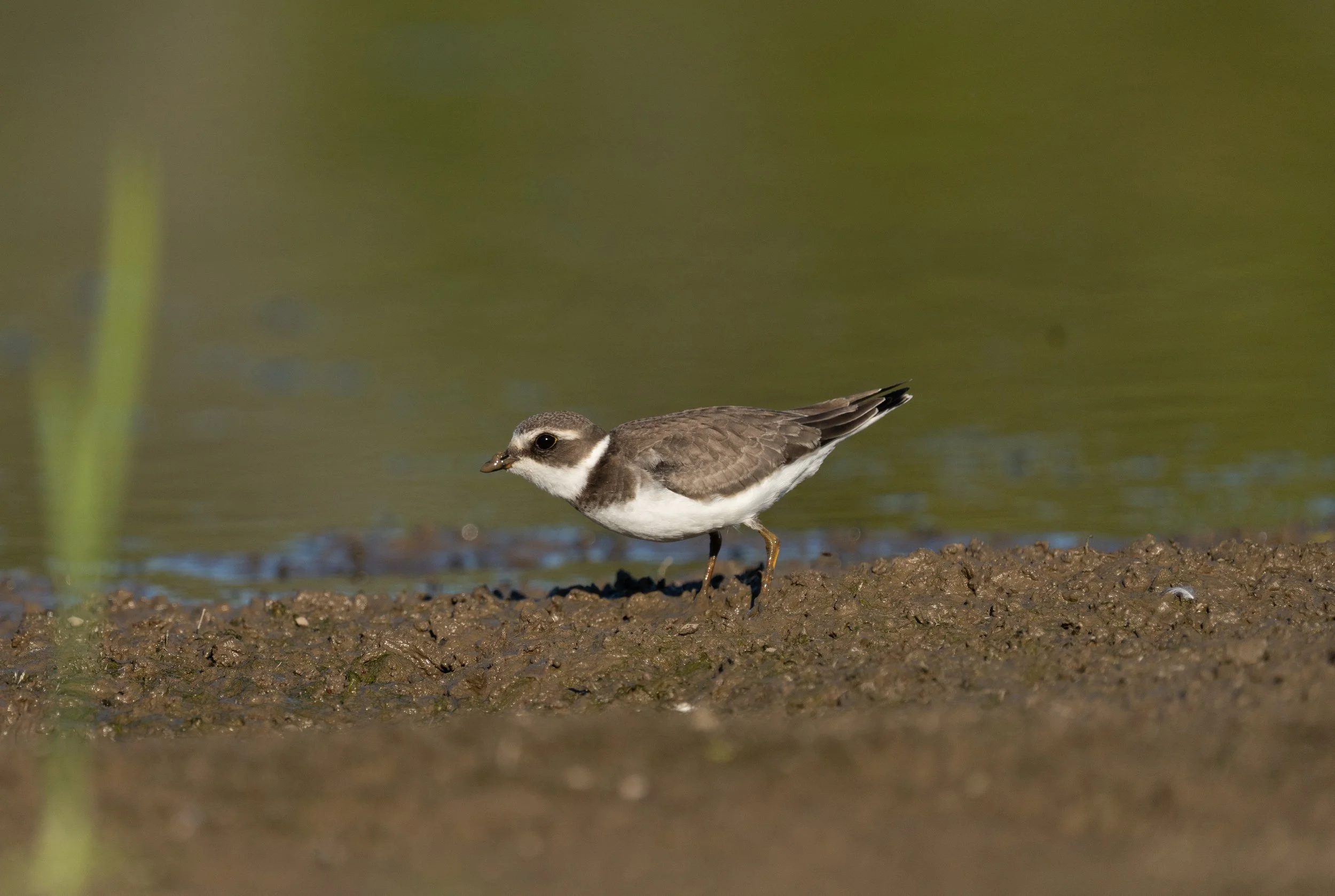
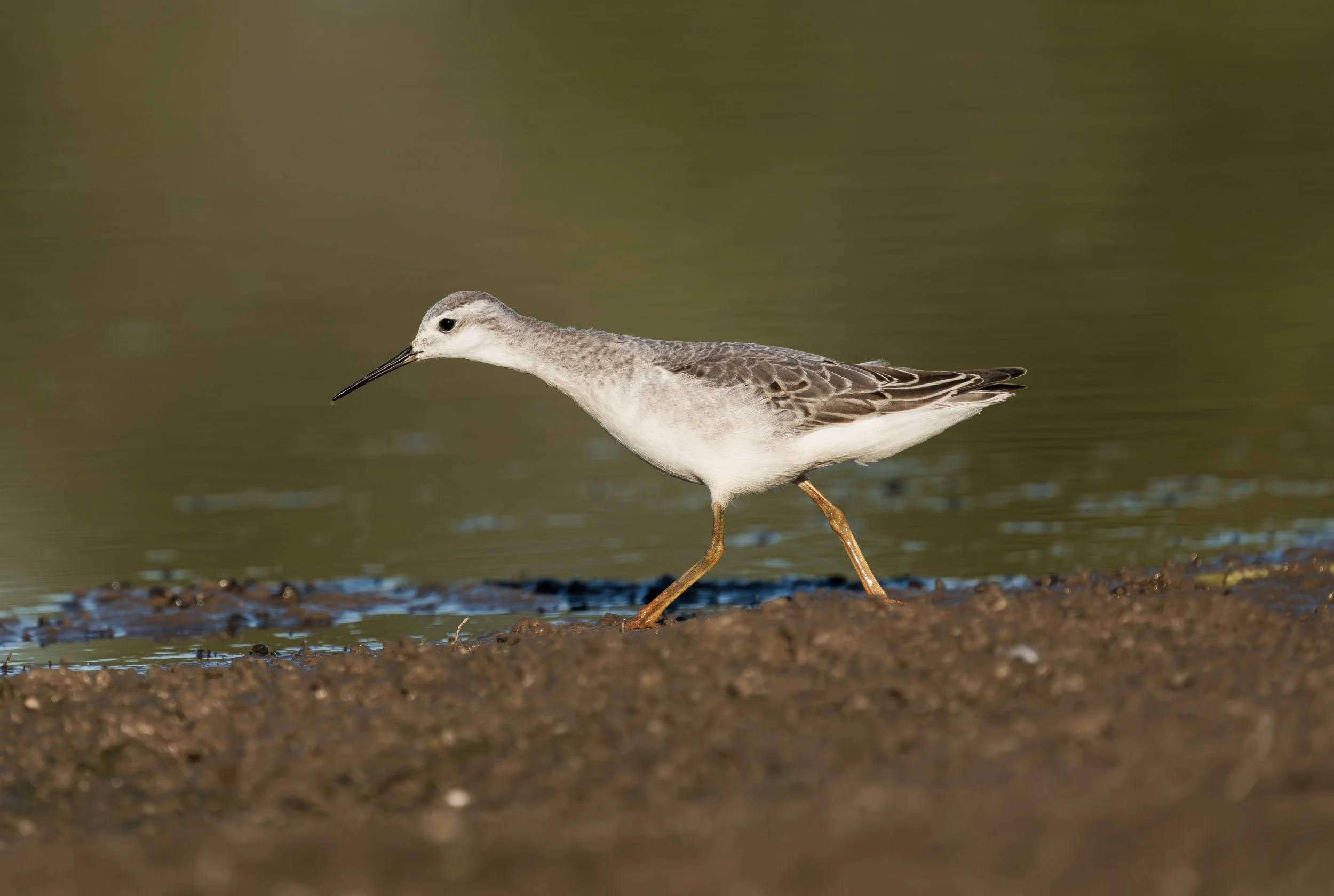
There is a strange moment every August when summer still seems firmly in place, yet the natural world has already begun to move on. The days remain warm, the trees are still green, and most people are thinking about beaches, patios, and squeezing the last few trips to the cottage out of the season. But along Ontario’s shorelines, lakes, ponds and rivers autumn migration is already underway.
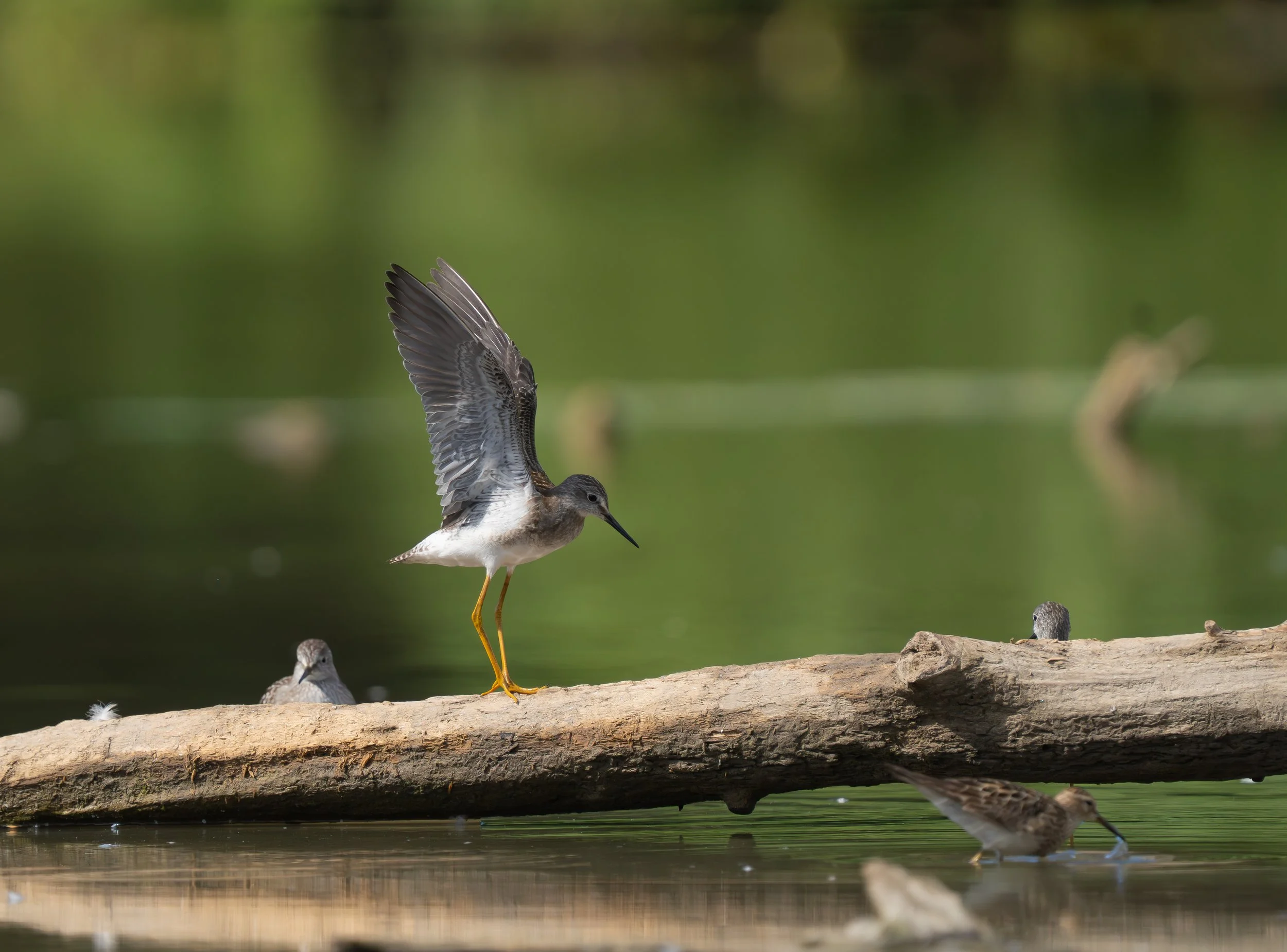
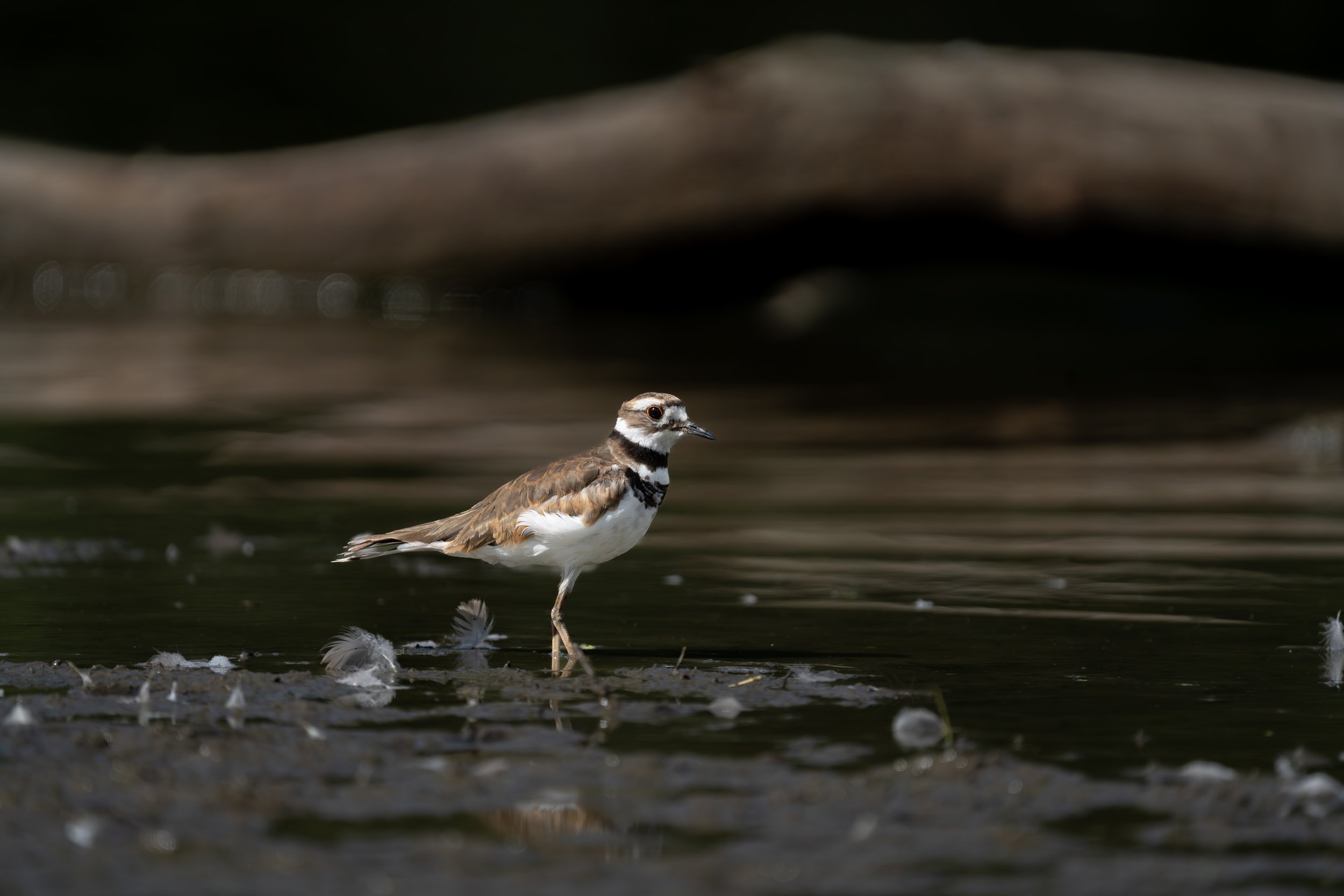
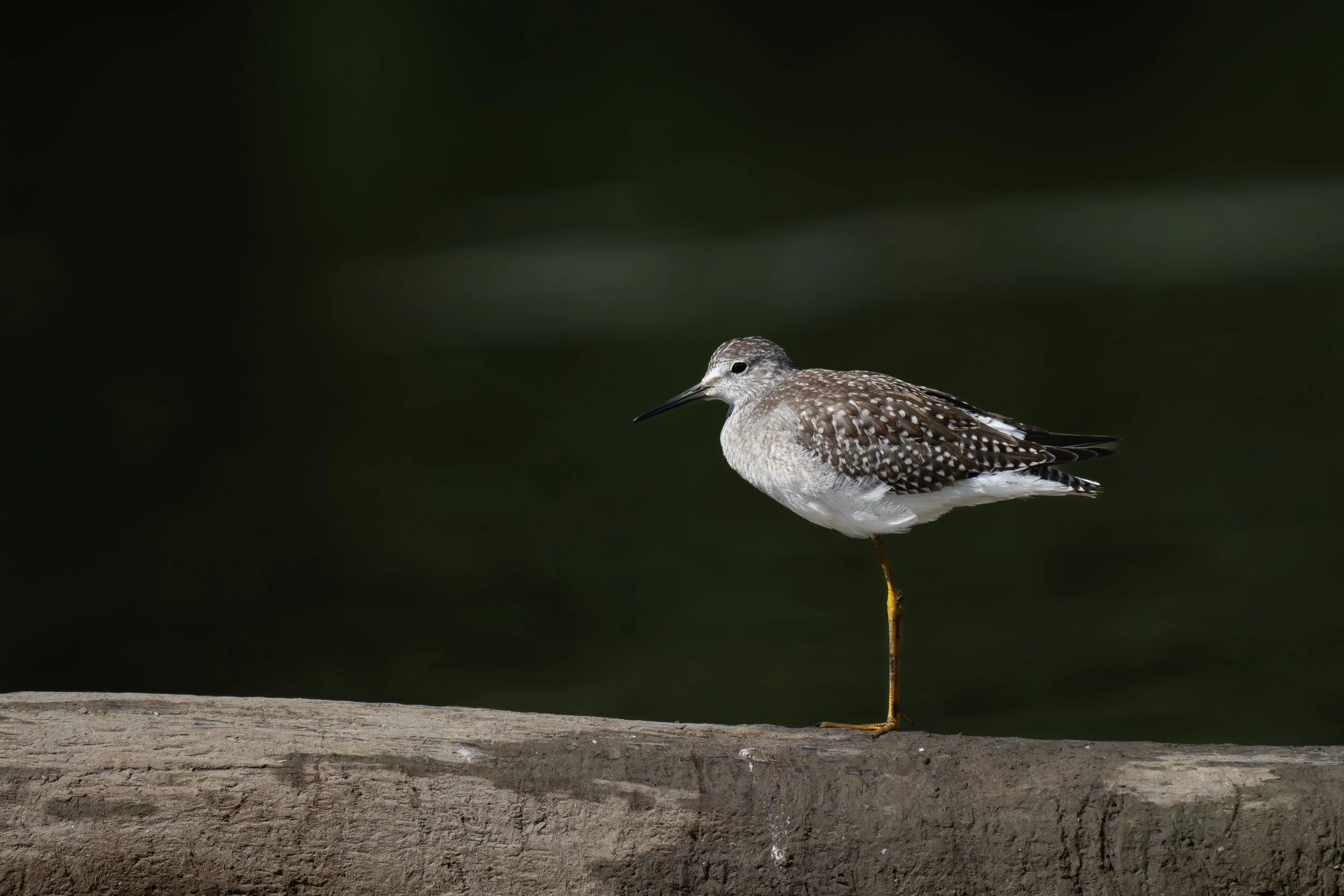
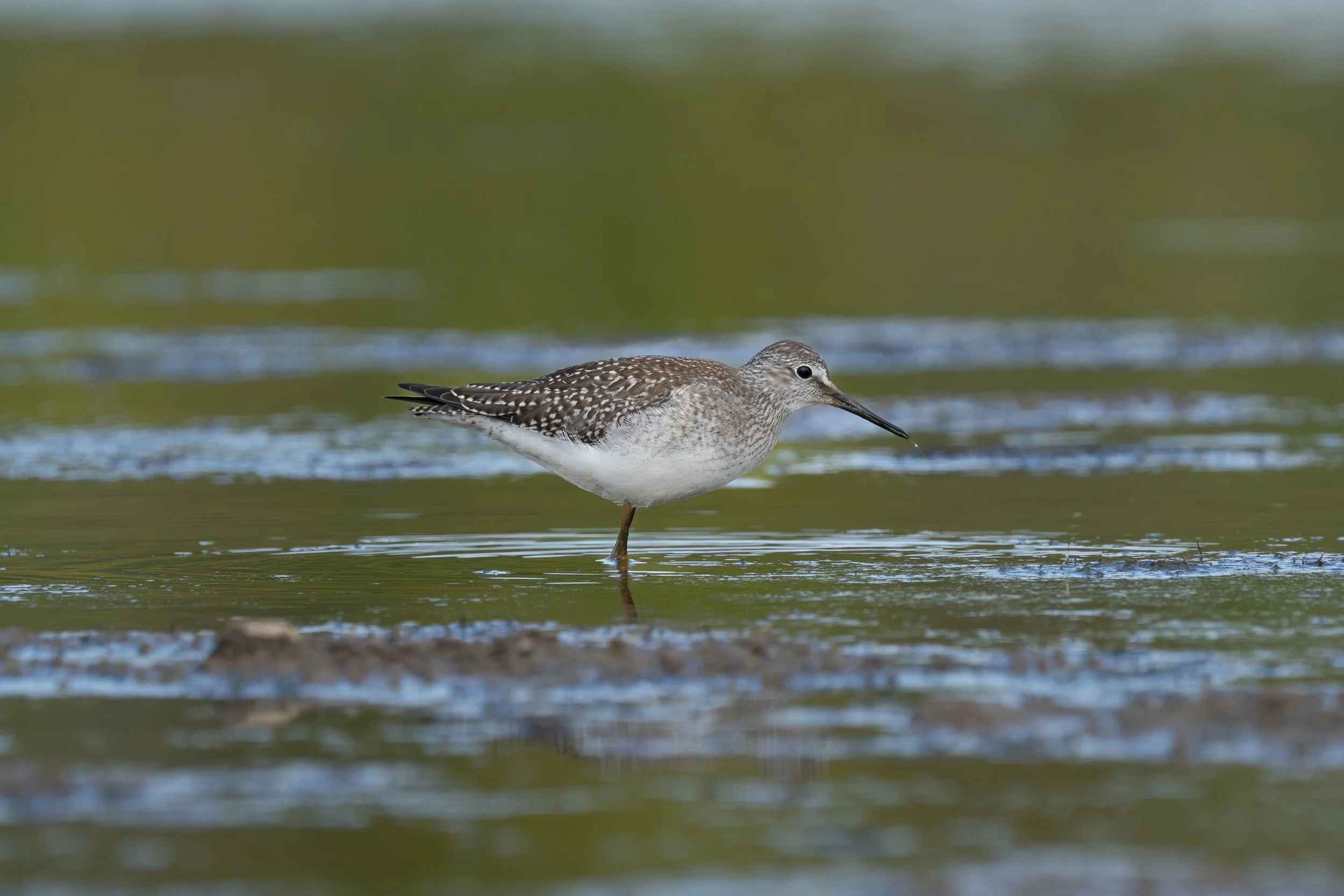
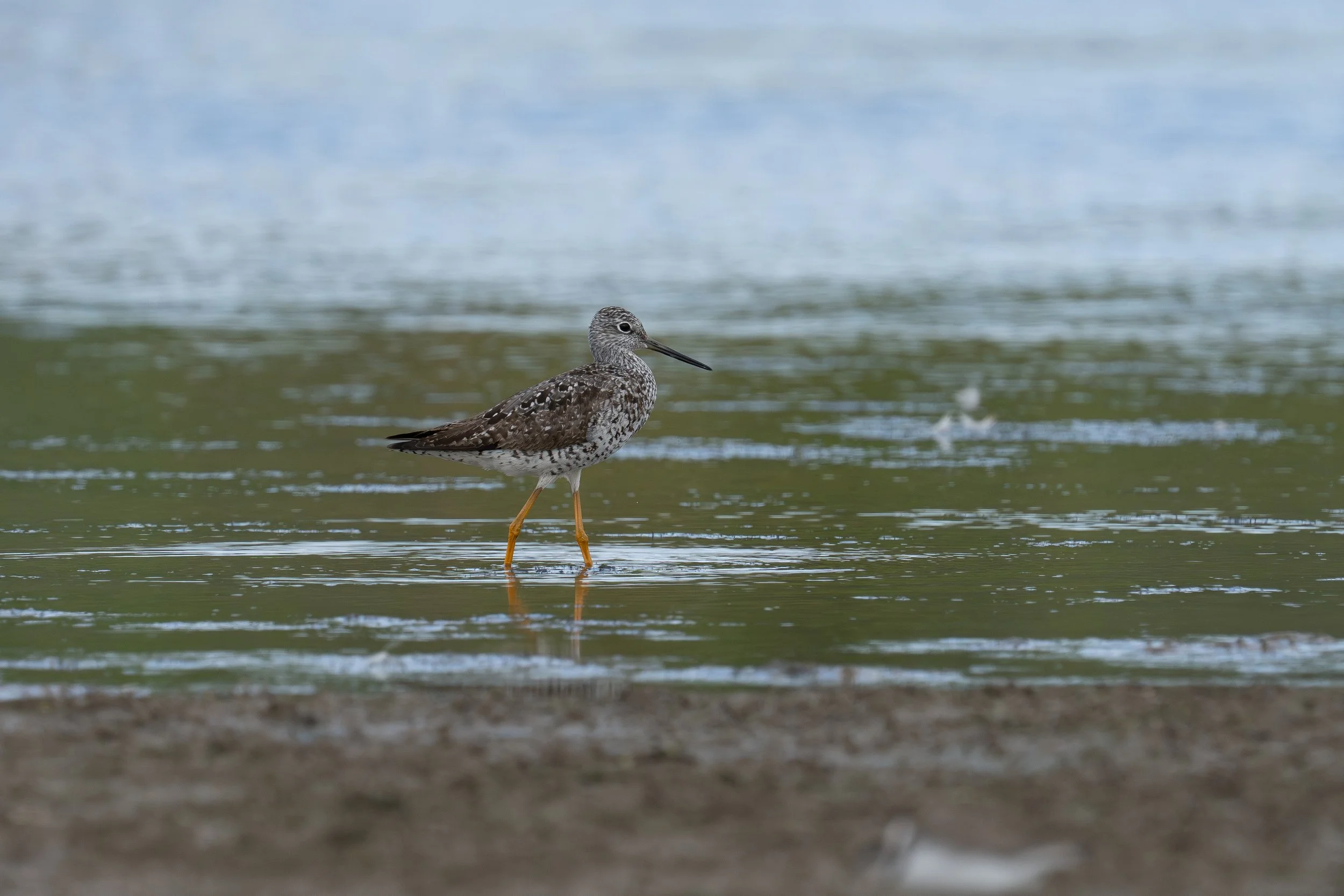
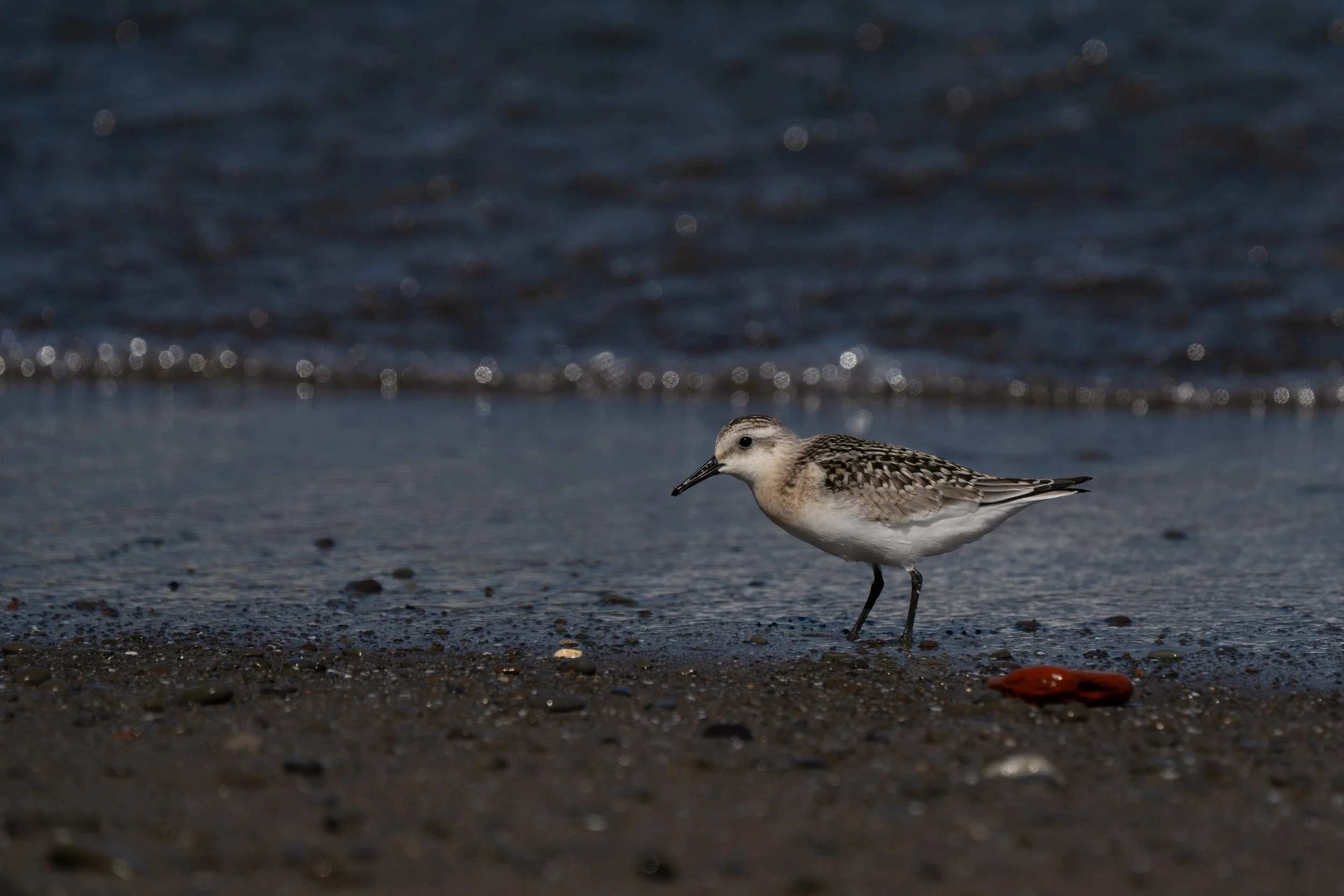
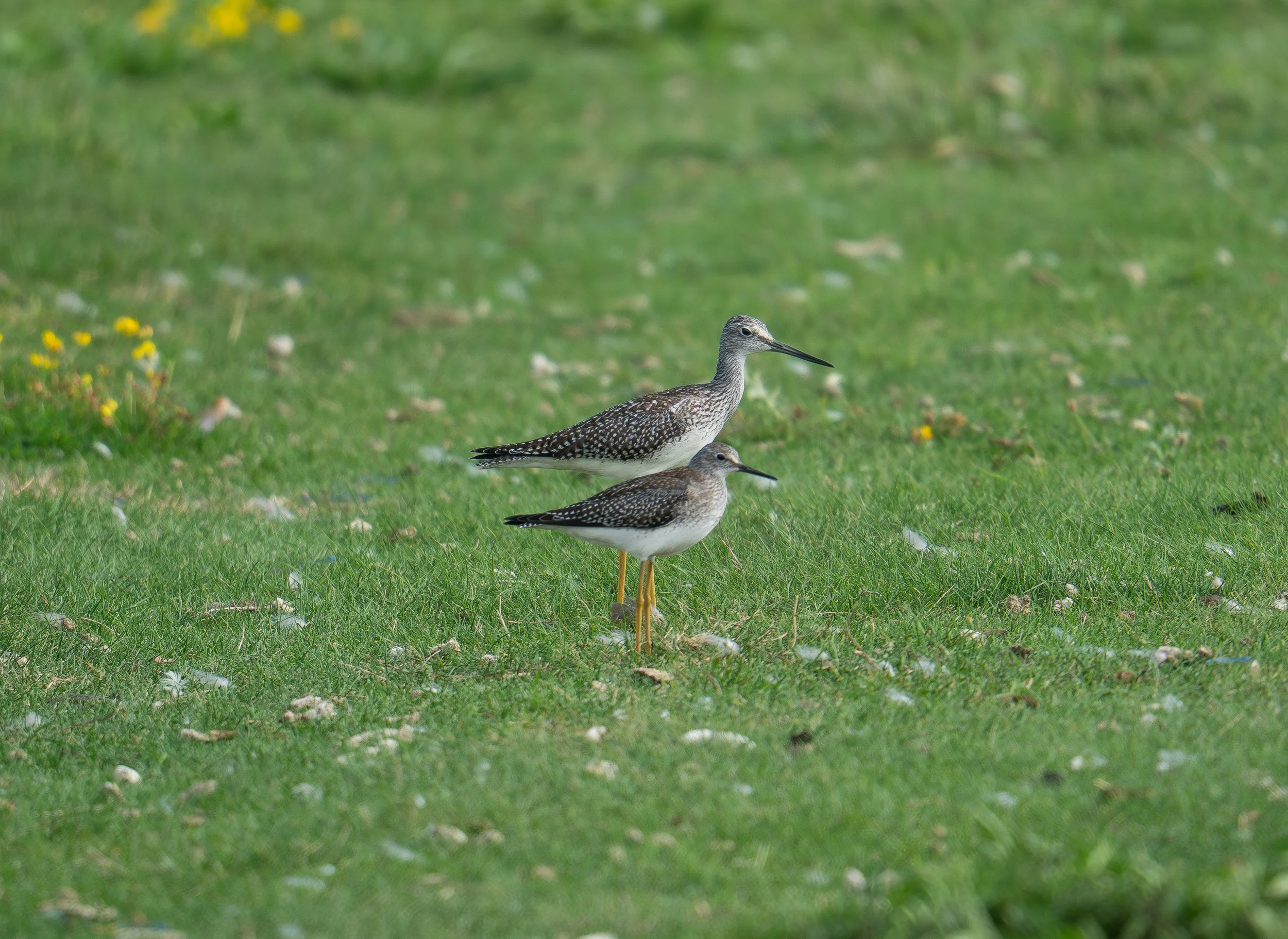
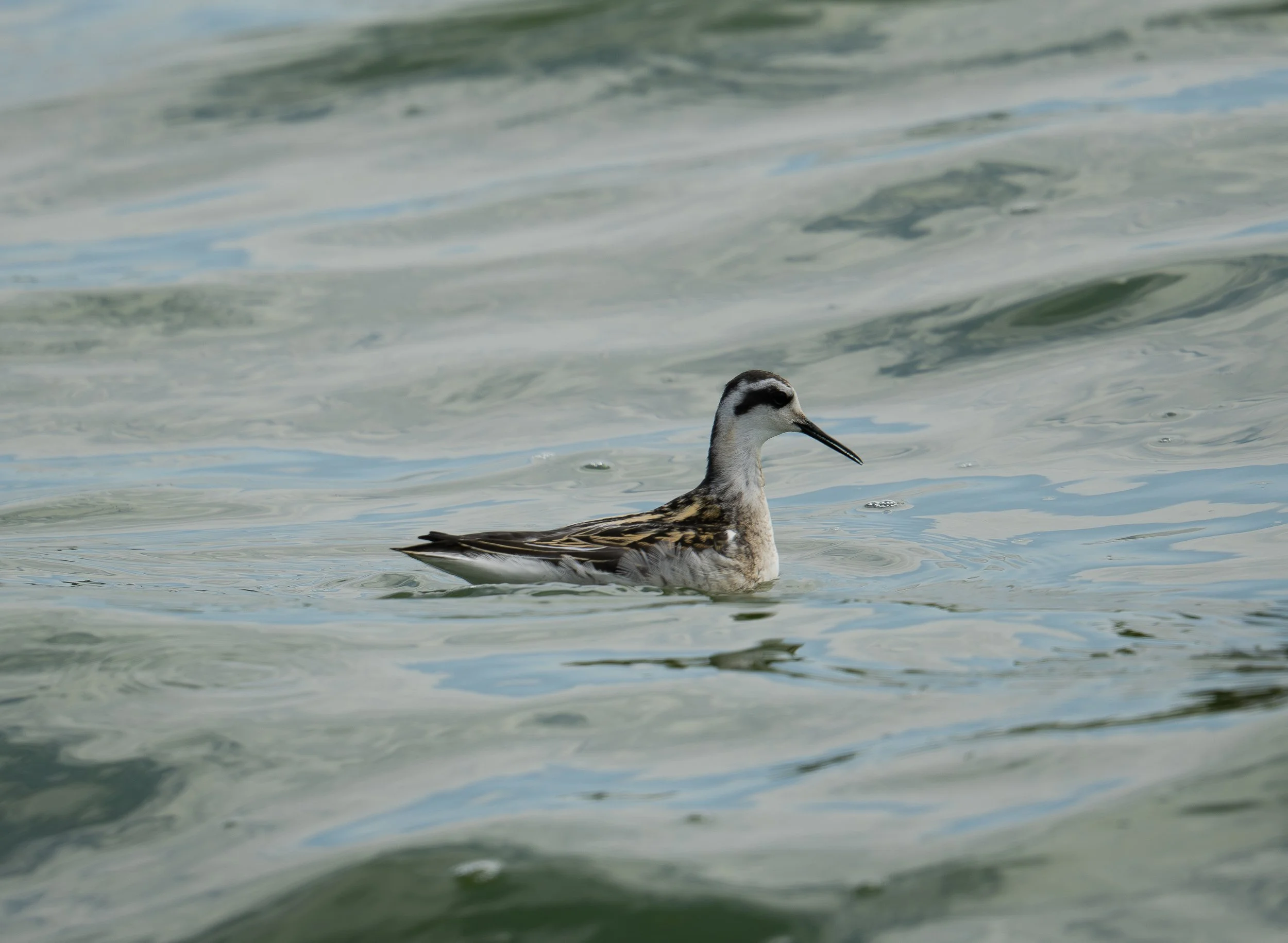
It begins quietly. A few Lesser Yellowlegs appear along with small groups of Least Sandpipers work patiently through the mud. Semipalmated Sandpipers gather along exposed shorelines, feeding constantly before continuing south. With a little luck, something less expected may appear among them, perhaps a Stilt Sandpiper, a Baird’s Sandpiper, or another bird that has travelled an extraordinary distance to spend only a brief moment in front of us.
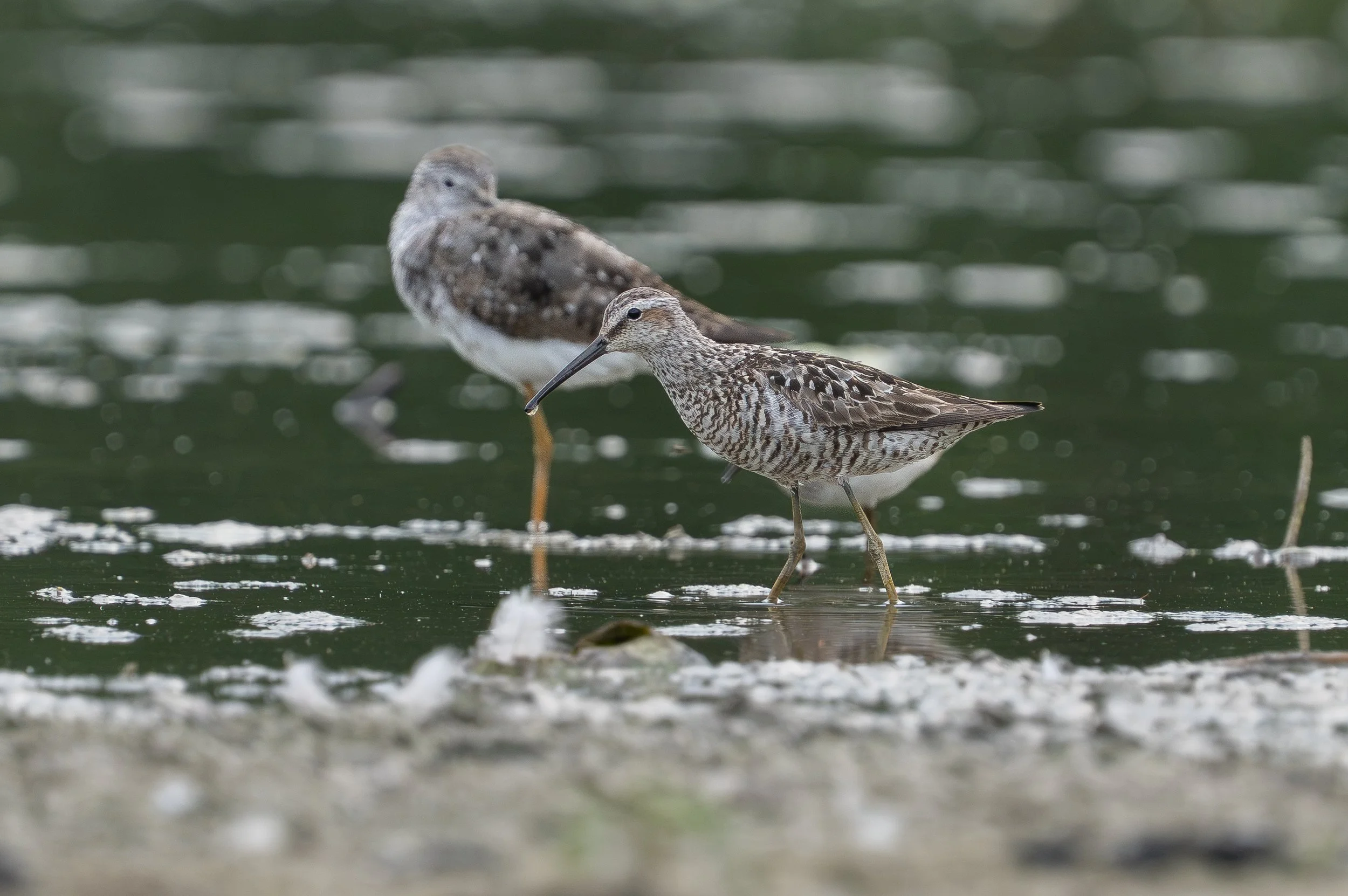
Stilt Sandpiper - New Hamburg 2026
Shorebirds have become one of my favourite groups of birds to observe. That was not always the case. When I was younger and first learning about this hobby, they seemed incredibly intimidating. Many are small, fast moving, and with plumages of subtle combinations of brown, grey, white, and rust. They rarely sit still for long, and they have a habit of standing beside another nearly identical bird just to make the identification process more interesting.
Over time, though, those subtle differences become part of the appeal for me. You begin to notice the delicate droop of a bill, the length of a leg, the shape of a bird’s body, or the way it feeds. One species moves carefully through shallow water, while another runs urgently along the shoreline as though it has somewhere extremely important to be. Learning shorebirds teaches patience. It forces you to slow down, look carefully, and appreciate details that are easy to miss.
Their migration stories make them even more remarkable. Many of the birds appearing in Ontario during August have travelled from breeding grounds across the Arctic regions of Canada. Some adults begin moving south while their young are still finishing their development. The juveniles follow later, making their first migration without their parents guiding them along the way.
Think about that for a moment. A bird that may weigh less than an average chocolate bar can leave the Arctic, travel across a continent, locate feeding areas it has never visited, avoid predators and storms, and eventually reach wintering grounds thousands of kilometres away.
Suddenly, a small brown bird on a mudflat does not seem quite so ordinary. Ontario’s beaches, lagoons, wetlands, and exposed shorelines provide essential places for these birds to rest and refuel. Many will remain for only a short time. A flock present in the morning may be gone by evening, replaced by a completely different group the following day. That uncertainty is part of what makes migration birding so exciting. You never really know what has arrived overnight. Some days bring large flocks and unexpected species. Other days require more patience. Either way, there is always something worth noticing, whether it is the careful feeding behaviour of a sandpiper, the elegant shape of a yellowlegs in flight, or the sudden realization that the bird in front of you began its journey somewhere near the edge of the Arctic Ocean.
Summer may not feel finished yet. But for the shorebirds passing through our province, their next great journey has already begun.
~Brett~
Beyond Release
Explore stories from the field, seasonal birding insights, species profiles, conservation science, travel inspiration, and updates from Avitura. Each article is designed to deepen your understanding of birds, their movements, and the landscapes they depend on.
Avitura and Hobbitstee Are Conducting Post Release Study!
Release is often treated as the final measure of success in wildlife rehabilitation. After treatment, recovery, conditioning, and careful assessment, a bird is returned to the wild and the immediate objective has been achieved. From a scientific perspective, however, release is not the conclusion. It is the point at which some of the most important questions begin. Does the bird survive the first days and weeks following release? Does it resume normal hunting and movement behaviour? Does it return to familiar habitat, establish itself somewhere new, or continue a seasonal migration? Are outcomes influenced by the original injury, the length of rehabilitation, the age of the bird, the time of year, or the location selected for release?
Avitura is partnering with Hobbitstee Wildlife Refuge to develop a long term post release study focused initially on American Kestrels, Red-tailed Hawks, and Rough-legged Hawks. As the project develops, we intend to expand the research to include other raptor species that are regularly admitted for rehabilitation. The purpose of the study is to better understand how rehabilitated birds survive, move, and behave after returning to the wild. By connecting rehabilitation records with observations collected after release, we hope to develop evidence that can be used to evaluate current practices and improve outcomes for future patients.
Who Is Hobbitstee?
(Hobbitstee Wildlife Refuge) is a wildlife rehabilitation centre operated by Chantal Theijn and dedicated to the care, recovery, and release of injured, orphaned, and displaced native wildlife. Through specialized treatment, careful assessment, and extensive practical experience, Hobbitstee works to give each animal the strongest possible opportunity to return successfully to the wild.
Chantal and the Hobbitstee team manage a diverse range of wildlife cases, including many of the raptors that will form the initial focus of this research. Their detailed knowledge of each bird’s admission, injuries, treatment, recovery, conditioning, and readiness for release provides the essential foundation for the study.
The partnership brings together two complementary areas of expertise. Hobbitstee will continue to lead the rehabilitation and release of participating birds, while Avitura will support auxiliary banding, post release monitoring, data collection, public reporting, and the eventual introduction of telemetry.
Together, the organizations aim to move beyond assuming that release represents a successful outcome. By following rehabilitated birds after they return to the wild, the partnership will begin building the evidence needed to evaluate survival, identify patterns, refine rehabilitation practices, and contribute to stronger standards of wildlife care.
Why Does Post Release Monitoring Matter?
Wildlife rehabilitation centres collect extensive information while an animal is in care. Records may include the cause of admission, the nature and severity of an injury, treatment history, recovery time, body condition, flight performance, and behavioural assessments.
This information is essential for determining whether a bird is ready to return to the wild. What it cannot tell us is what happens afterward. A bird may leave the release site and resume normal behaviour almost immediately. Another may struggle to hunt, move unusually, remain close to the release area, or experience complications that were not apparent during rehabilitation. Without post release monitoring, these outcomes may never be documented.
A successful release should involve more than the ability to leave a carrier and fly from sight. It should also include survival, appropriate movement, normal behaviour, and the ability to function independently in the wild.
Collecting this information can help determine whether current rehabilitation practices are producing the intended results. It may also reveal opportunities to improve treatment, physical conditioning, behavioural assessment, release timing, habitat selection, and the criteria used to determine whether a bird is ready.
How Will Our Study Work?
The first stage of the study will use coded auxiliary leg bands.
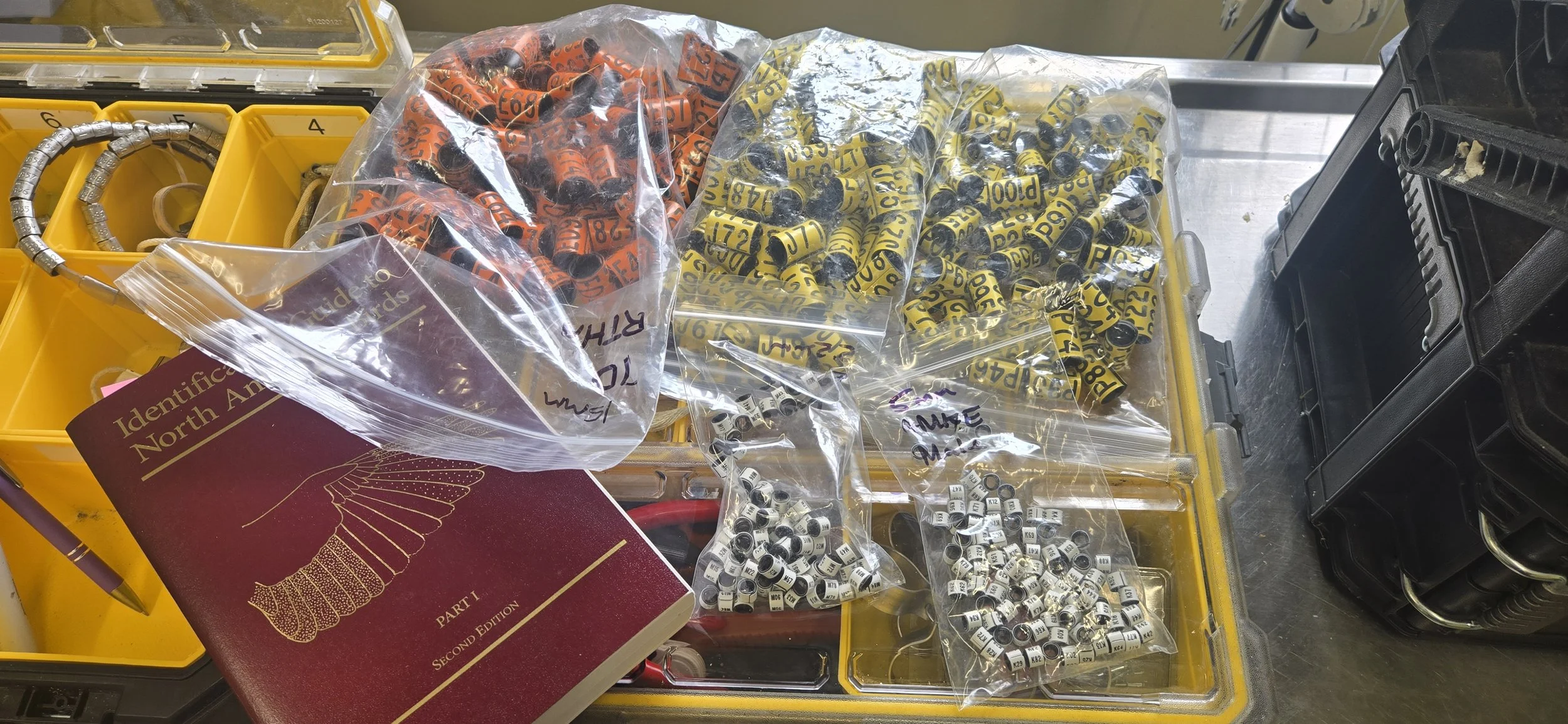
Auxilliary Bands
A standard federal bird band contains a unique identification number, but the number is generally too small to read unless the bird is captured again or recovered. An auxiliary band is larger and uses a visible colour and letter or number combination that may be read through binoculars, a spotting scope, or even a photograph. This allows an individual bird to be identified without needing to capture it again. Each bird will receive a unique code linked to its rehabilitation and release records. When that bird is observed again, information such as the date, location, behaviour, apparent condition, and surrounding habitat can be documented.
A single observation may confirm that a bird survived for a particular period following release. Repeated observations can provide a more complete history of its movements, habitat use, migration, territorial activity, and ability to persist over time. For example, auxiliary band reports may help determine whether a bird remained near its release site, returned to a previous territory, travelled a considerable distance, or appeared elsewhere within its expected range. They may also document behaviours such as hunting, migration, interaction with other birds, or the use of suitable habitat.
Understanding the Limits of Band Sightings
Auxiliary banding is a valuable research tool, but it does not provide continuous tracking. A bird that is not observed again cannot be assumed to be either dead or alive. Until further evidence appears, it occupies a slightly Schrödingerian category: not lost, not confirmed, simply unknown. It may have dispersed into an area with fewer observers, moved onto private property, occupied remote habitat, or simply remained undetected. Band resightings therefore reflect both whether a bird survived and whether someone had a reasonable opportunity to see and report it. These limitations must be considered when the data are interpreted. Even so, auxiliary bands allow a relatively large number of birds to be monitored at a manageable cost. They also create an important role for birders, photographers, landowners, and wildlife professionals. A clear photograph or carefully documented band code may provide the first evidence that a bird survived, migrated, returned to a territory, or established itself in suitable habitat. As more observations are collected across multiple birds and seasons, those individual records can begin to reveal broader patterns.
The Next Step: Telemetry
As the study develops and funding becomes available, Avitura and Hobbitstee intend to introduce telemetry for selected birds. Telemetry uses a small tracking device to collect information about an animal’s location or movement. Depending on the species, body size, study question, expected movement, and available technology, this may involve conventional radio transmitters, automated receiving networks, GPS units, cellular systems, or satellite tracking. Telemetry can answer questions that band sightings alone cannot. It may show where a bird travels immediately after release, how far it moves each day, which habitats it selects, whether it establishes a normal home range, and when it begins migrating. It may also help distinguish between a bird leaving the study area, a transmitter failing, and a probable mortality event. This information is especially valuable during the first days and weeks following release, when a bird is transitioning from rehabilitation to independent survival. One bird may leave the release area quickly and resume expected movements. Another may remain unusually close to the site or demonstrate limited activity. These differences may provide important insight into the effectiveness of physical conditioning, release timing, release location, and other rehabilitation practices. For migratory species, telemetry may also allow researchers to document movement across a much larger geographic area. It may reveal migration routes, stopover locations, wintering areas, and the timing of seasonal movements that would be difficult or impossible to document through visual observations alone.
Responsible Use of Tracking Devices
Tracking devices must be used carefully and only when the scientific value of the information justifies their use. Device weight, attachment method, expected deployment period, species behaviour, and the potential effects on flight, hunting, and natural movement must all be considered. Not every bird will be an appropriate candidate for telemetry. For this project, devices will only be used when the method is suitable for the species and individual bird, the research question is clearly defined, and all necessary permits, approvals, and animal welfare requirements have been met. The objective is to collect meaningful information while minimizing any influence on the bird’s ability to behave naturally.
Why Begin with These Species?
American Kestrels, Red tailed Hawks, and Rough legged Hawks provide a useful starting point because they differ in size, behaviour, habitat use, and seasonal movement.
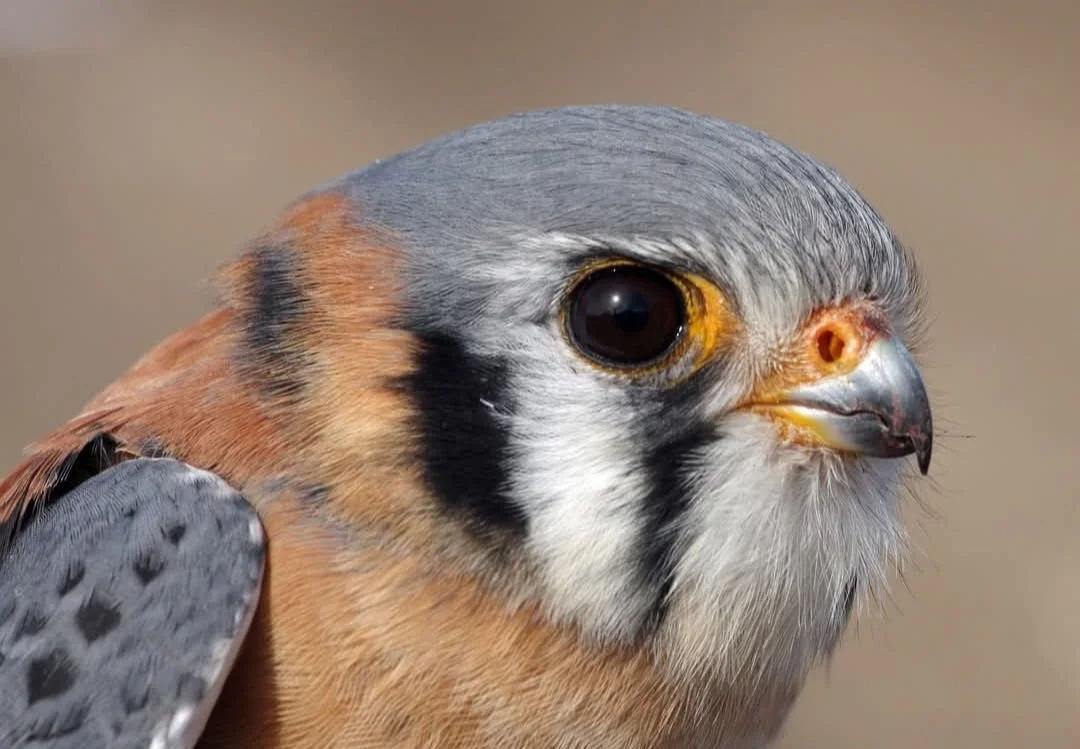
American Kestrels are small falcons associated primarily with open habitats. Depending on the individual and season, they may remain within a local area, disperse across a wider region, or migrate.
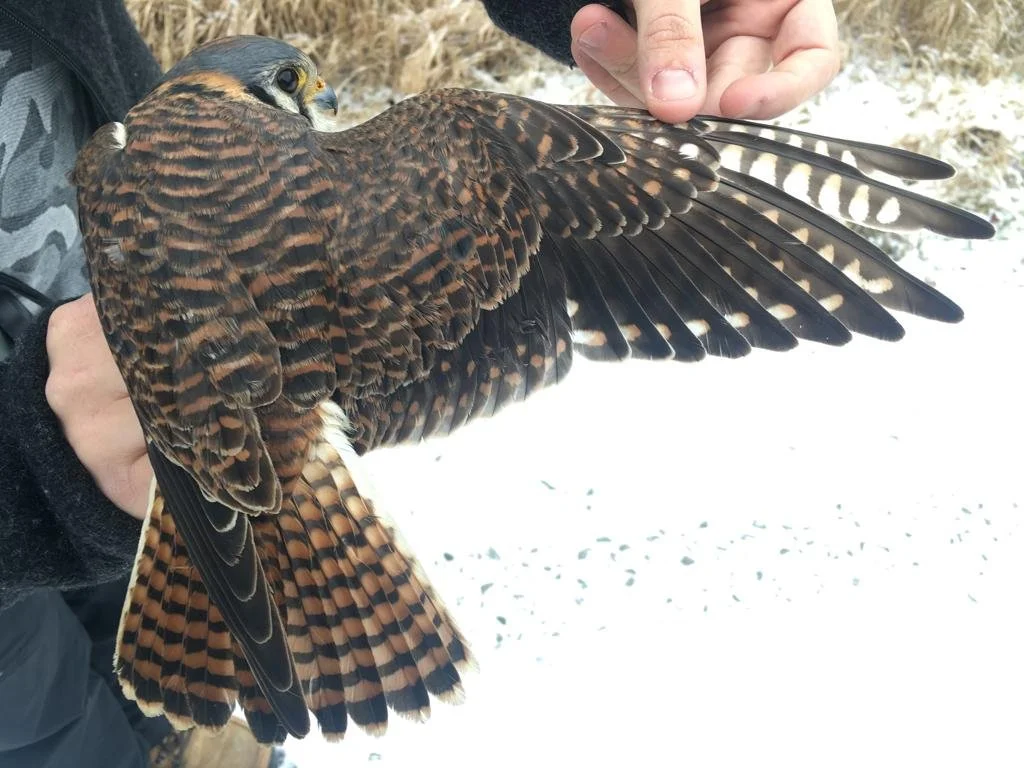
Female American Kestrel
Red-tailed Hawks are larger and may be resident, locally mobile, or migratory. Their size, visibility, and frequent use of open landscapes may also increase the likelihood that auxiliary bands can be observed and reported.
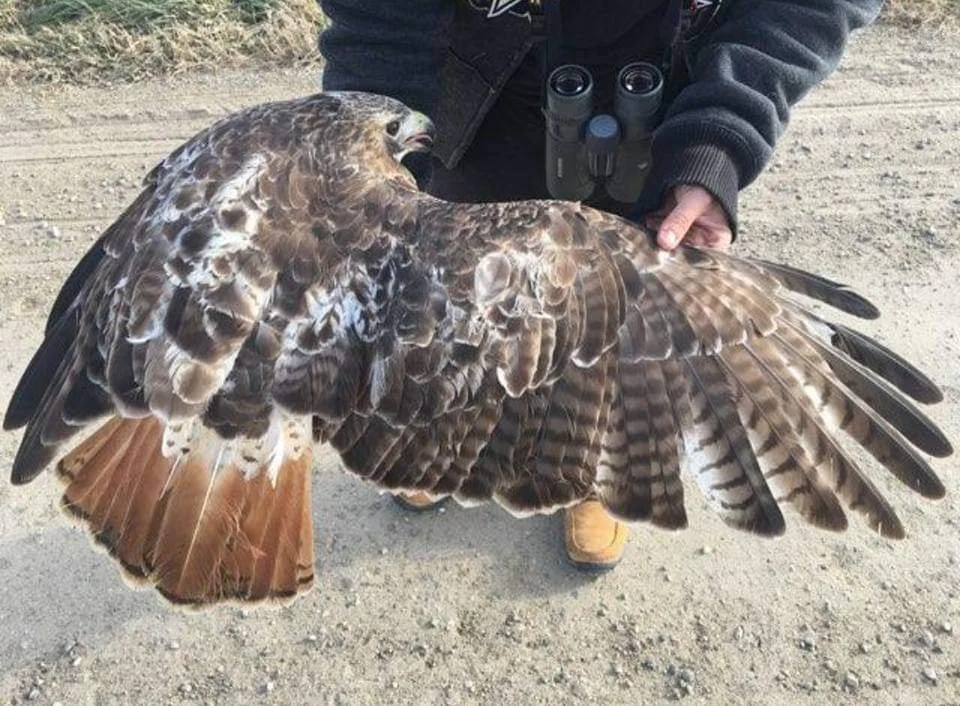
Red-tailed Hawk
Rough-legged Hawks are long distance migrants that breed in northern regions and winter across southern Canada and the United States. Monitoring rehabilitated individuals may provide information about both their local adjustment following release and their subsequent migration.
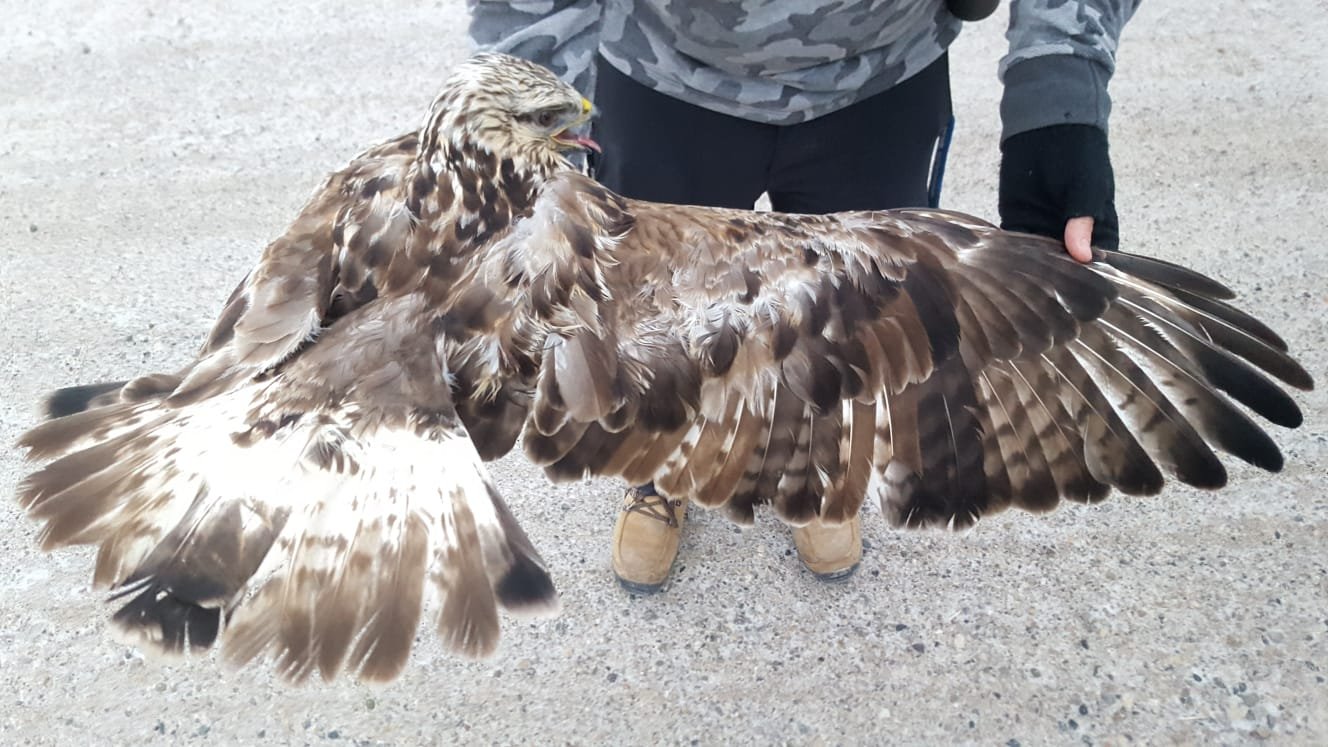
Rough-legged Hawk
Together, these species will allow the study to examine different ecological strategies and evaluate monitoring methods across a range of body sizes, habitats, and movement patterns. As the program becomes established, the study may expand to include additional raptor species that are regularly treated and released by Hobbitstee.
Connecting Rehabilitation with Life After Release
The greatest scientific value of the project will come from connecting post release observations with the information collected during rehabilitation. Potential variables may include the cause of admission, age, sex where known, injury type, injury severity, treatment provided, length of rehabilitation, body condition, flight performance, behavioural assessment, release date, release location, season, weather conditions, subsequent observations, telemetry detections, and confirmed survival or mortality information. As the number of monitored birds grows, these records may allow meaningful comparisons to be made. Does the length of time spent in rehabilitation influence movement following release? Do adults and younger birds show different outcomes? Are birds released near their original capture location more likely to resume normal activity? Are certain injuries associated with reduced survival even when the bird appears to meet current release criteria? These questions cannot be answered through one bird or one season.
Meaningful conclusions will require consistent methods, careful interpretation, and information collected over many years. Early results will need to be treated cautiously, particularly where sample sizes are small or detection rates are limited. The objective is not to force simple conclusions. It is to build a reliable body of evidence.
The purpose of the project is not to prove that existing methods are correct. It is to evaluate them. When birds survive and return to normal movement and behaviour, the findings can provide evidence supporting the rehabilitation and release practices being used. When outcomes are inconsistent or poor, the information may identify areas where changes should be considered. Those changes could involve treatment methods, physical conditioning, behavioural assessment, release timing, habitat selection, release location, monitoring intensity, or the management of particular injuries. Over time, the findings may help Hobbitstee refine its own practices and contribute to broader discussions about how rehabilitation success should be measured.
This is applied wildlife science. Each band sighting, movement record, telemetry detection, and confirmed outcome becomes part of a larger effort to improve care for future patients.
How Birders and the Public Can Help
Public observations will be an important component of the auxiliary banding program. Birders, photographers, landowners, and wildlife professionals may be the first people to relocate a marked bird following release. When the project begins, Avitura and Hobbitstee will publish clear information about the band colours, identification codes, participating species, and reporting process. Observers should never approach, flush, bait, or disturb a bird to obtain a band code. Reports should be made from an appropriate distance using binoculars, spotting scopes, or photography. A useful report may include the date and location, the species, the colour of the band, the complete or partial code, a photograph where possible, and notes about the bird’s behaviour or apparent condition. Even an incomplete report may provide valuable information.
Building the Project
The first phase of the study will focus on establishing the auxiliary banding program, standardized data collection, a public reporting system, and a long term database. The next stage will involve securing the funding, equipment, permits, approvals, and technical support required to introduce telemetry. A portion of the proceeds from Avitura experiences offered in Ontario will be contributed directly to this initiative. These contributions will help support auxiliary bands, tracking equipment, field monitoring, data management, and the eventual expansion of the study.
Avitura will also share selected stories from individual birds as the project develops. These accounts will follow birds from their admission to Hobbitstee through treatment, recovery, release, and any subsequent observations or tracking information. These stories will be grounded in documented evidence. Some birds may be observed repeatedly. Others may travel far beyond the reach of local monitoring. Some may provide clear evidence of successful rehabilitation, while others may reveal limitations, unexpected outcomes, or new questions.