The World Hiding in Plain Sight
A conversation with Michelle about curiosity, Snowy Owls, and learning to see more of the world around us
One of my favourite things about birding is that nobody seems to arrive here in quite the same way. Some people can point to a single bird. Birders sometimes call it a “spark bird,” the bird that turns a casual interest into something much harder to shake.
I have one of those myself. My interest in birds was already growing when Red-headed Woodpeckers began regularly appearing at the feeders on my father’s farm. They were hard not to notice. Brilliant red heads, clean white bodies and those bold black-and-white wings moving through a place that was already deeply familiar to me. There was something about seeing a bird that striking appear almost casually in the landscape around home. I already wanted to know more about birds, but those woodpeckers poured fuel on it. They made me pay closer attention, and once you begin paying attention to birds, the world has an unfortunate habit of becoming much larger.
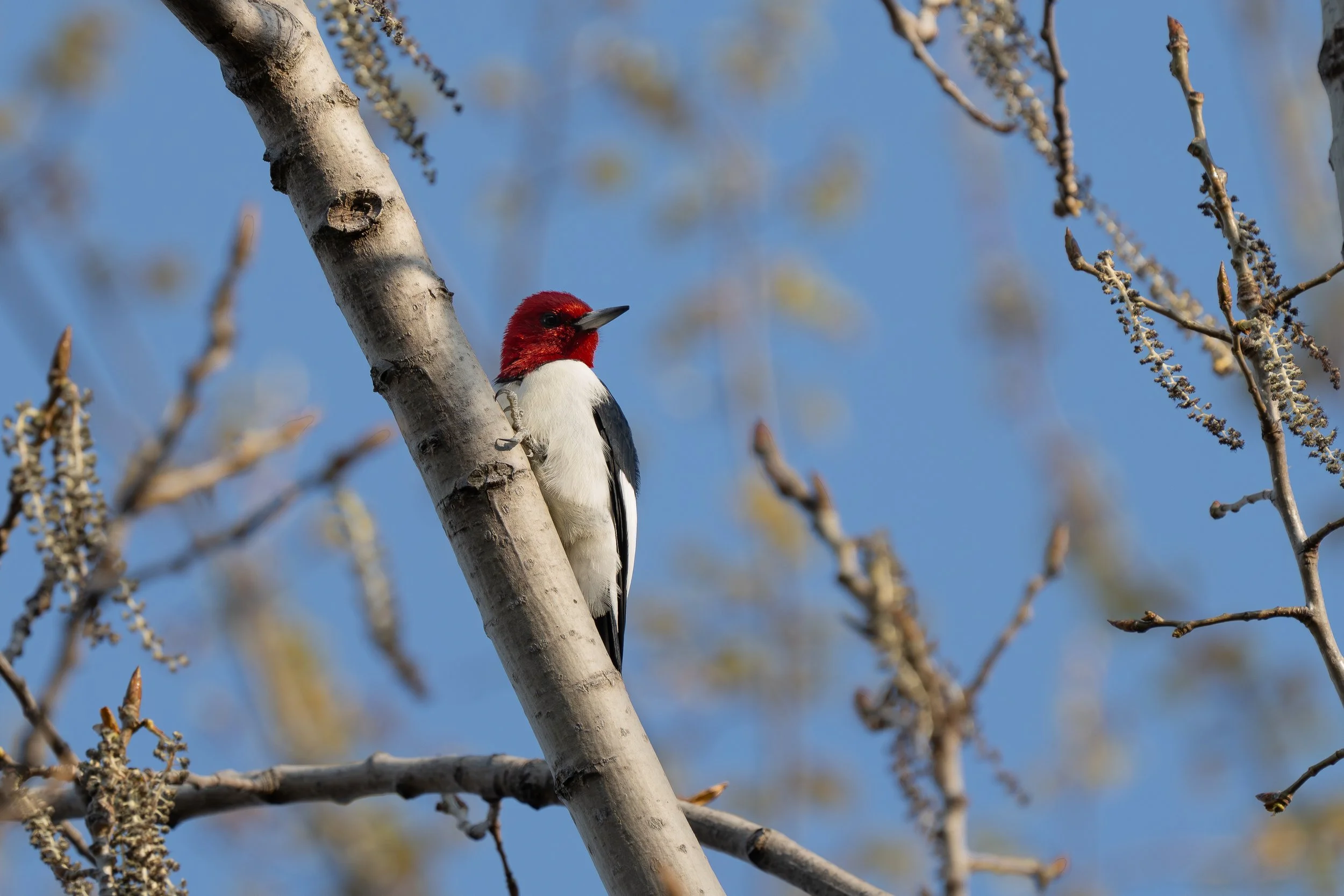
Red-headed Woodpecker - Long Point - May 2026
A field stops simply being a field. A stand of dead trees becomes worth scanning. A little patch of wetland beside the road suddenly has possibilities. You start hearing things you somehow never noticed before. That curiosity is part of what eventually led me here, and it is something I think about often when I am guiding.
I spend a lot of time talking about birds, but I am equally interested in why other people care about them. What was their beginning? What keeps bringing them outside? What did they notice today that they might not have noticed a year ago? These are questions I like asking people I bird with, whether they are completely new to birding or have been doing it for years.
Michelle has joined me for several Avitura outings now, and over that time I have watched her own relationship with birding continue to grow. She is curious, enthusiastic, observant and always interested in understanding a little more than simply what species is sitting in front of us. So I asked her some of the questions I often find myself asking participants. Her answers made me laugh in places, made me think in others, and captured something about birding that I think many of us recognize.
Where did your connection with birds and the natural world begin?
This is one of my favourite questions to ask because the answers are almost never really about birds alone. Sometimes they begin with family, sometimes insects, fishing trips, camping, a grandmother’s garden, or a pair of binoculars handed down. Sometimes there is no identifiable beginning at all. Nature was simply always there.
Michelle’s answer felt very much like that.
“It’s hard for me to put my love for nature into a specific timeline! I was always drawn to animals and the outdoors when I was a kid, and my family fostered that love. I was really easy to please– you could have thrown me into a sand pit and I’d go looking for ants and beetles for five hours. So, that also made the parenting part easier for them. You’re welcome Mom and Dad. My father and his side of the family have loved gardening for as long as I can remember, so some of my first memories with them are of crawling in dirt, chasing after butterflies that were much faster than me, and giggling at junebug grubs they tilled out of the ground. Like most children, I went through many stages of considering careers. I practically gave myself decision paralysis when I found out you could do so many hyper-specific things. I wanted to be an archaeologist, an entomologist, a marine biologist, and more all at once.
The concept of flight was something that I always found interesting. As a kid, I had dreams where I’d fly over cities and forests. I’ve always been fond of butterflies and dragonflies, the mechanics of airplanes, and anything else that includes flying. (One of my favourite movies, which I’d force my dad to play on repeat every single night, was the Bee Movie.)
Alongside flight, I have always loved sound. Everything is music to me, and it has been for as long as I can remember. As a musician now, studying birdsong is one of my favourite aspects of birding!
My love for birds came quite naturally with all that groundwork. When I got my first camera, the Red-winged Blackbirds at a creek near my grandparent’s place were one of my first subjects. They were boisterous and displaying all the time; pretty easy compared to the secretive birds I seek now. Watching them fly and hearing their alien song was the best.
Then, we took care of a quaker parrot named Bean while her owner, a family friend, was on vacation. I loved her. She danced when you said “tuk tuk” and she loved bathing in her water bowl. What I had a hard time appreciating is that she had an inner alarm clock at five in the morning, and would scream until she was let out. She was a wonderful, territorial bird, and she made me realize how much I wanted to see them out in the wild instead. Partially because of the alarm clock I couldn’t press snooze on, and partially because birds deserve a big space to explore.
So many other experiences and people led me to where I am now, completely taken with birds!”
I love that there is no neat beginning. There are ants and beetles, butterflies, gardening, music, flight, and a very enthusiastic parrot named Bean. Then, somewhere in the middle of all of that, Red-winged Blackbirds begin appearing through a camera lens. That feels much closer to how a love of nature actually develops.
Before I knew migration routes, ageing characteristics, habitat associations, molt patterns or any of the other things that eventually occupied an unreasonable amount of space in my head, I was simply interested. I wanted to know what I was looking at. Then I wanted to know why it was there, where it went, and what else might be nearby. One question has a tendency to produce three more, and that curiosity is still probably the thing I value most in naturalists. Expertise comes later. First, you have to care enough to look.
What does birding give you that other parts of life do not?
I ask variations of this question fairly often. Not because I think birding needs some grand justification, but because the answers reveal why people keep coming back to it. There are plenty of hobbies, but very few seem to change the way people physically move through the world.
Birders walk differently. We stop constantly. We listen. We look behind us. We stare suspiciously at distant fenceposts. We interrupt conversations because something chipped from a shrub twenty metres away. Somehow, all of that can also be incredibly calming.
Michelle described it this way:
“Birding never fails to take me out of the great stresses of life and put me into a focused, peaceful state of mind. So often I find myself reaching for activities that only really serve as a meaningless distraction, where when I go birding, I’m put into a space where I can clear my head completely and fill it with a mission to find cute birds instead. Along the way, I find my heart calming and my shoulders relaxing and my lungs filling with cleaner air. Another plus is that if I do an eBird checklist, it makes me feel like I’m helping science! There’s a lovely sense of community and togetherness that you don’t really see as much elsewhere. If someone has a set of binoculars or a camera in their hand, they immediately become approachable to another birder. Curiosity sparks merely at the sight of the equipment because we want to know what cool things might be around! Some people keep what they saw a secret (often because word travels quick and a rarity might be disturbed), but when they do share, it’s a tidbit of trust that melts my heart. We’re all living this life for the first time, and being able to share the big or little gems we find is what makes it all worth it. Too many people are glued to screens inside– and I find it hard to believe that people don’t hear birds outside. It’s just background noise to them, and that’s crazy to me. They’re oblivious to a whole world that is hiding right under their noses! That’s why the community means so much to me; many people are eager to share ”
That idea of a whole world hiding under our noses is really what this article became about for me. The birds were always there. When somebody becomes interested in birding, the landscape does not suddenly contain more life. What changes is what they notice.
A distant chip becomes something worth investigating. A dark shape perched at the top of a tree becomes a question. A flooded agricultural field becomes something you deliberately turn the car around to scope. You begin noticing that the same place can be completely different from one week to the next. There is something deeply satisfying about gradually becoming fluent in a landscape that previously seemed quiet.
Birding has also given me a community that I probably would never have found otherwise. I have met an extraordinary range of people because one of us happened to be holding binoculars. Sometimes that is genuinely all the introduction you need. “What are you seeing?” can be enough to turn two strangers into people sharing the same little adventure.
There are certainly complicated parts of birding culture, particularly around rare birds and the responsibility that comes with sharing sensitive information, but at its best there is an enormous generosity within this community. Someone points you toward a bird. Someone gives you a better angle through their scope. Someone explains a call you have been struggling with. Eventually, you get to do the same thing for somebody else. I have always liked that cycle.
Is there a moment from one of our outings that has stayed with you?
This is another question I like asking after tours. The answer is not always the rarest bird. In fact, it often is not. Sometimes it is a sound, a joke, a completely unexpected animal, a moment when something finally clicks, or simply the reaction of the person standing beside you.
Michelle and her dad joined me for a winter outing with a fairly specific objective: owls.
“I’ve gone on a number of birding tours with Brett, and I have good memories & laughs from each trip!
The first time I went, I had asked him to take my dad and I to look for Snowy Owls. My father has always loved owls, and every time we go out together, we look for them. The only luck we had before taking this tour was hearing some Great Horned Owls from afar one night. The tour was my Christmas gift for him!Brett helped my dad understand stuff at his level of birding, while also being able to nerd out with me at mine! What’s special about it was that both my dad and I took home new tips, tricks, and fun facts. For example, while we were out on the backroads, Brett did a really good job explaining the difference of a Snowy Owl’s white compared to the white of the snow. With some patience (and a tip from a birder who passed by), we were able to find some! The smile on my dad’s face when he saw the beautiful male sitting on the hill made it all worth it.
And, Brett is so generous! Not only did he help us find some owls that day, he helped us find some other winter species and set up his scope and offered up a field guide for us to look as well. It was really immersive, and every moment felt special to us.”
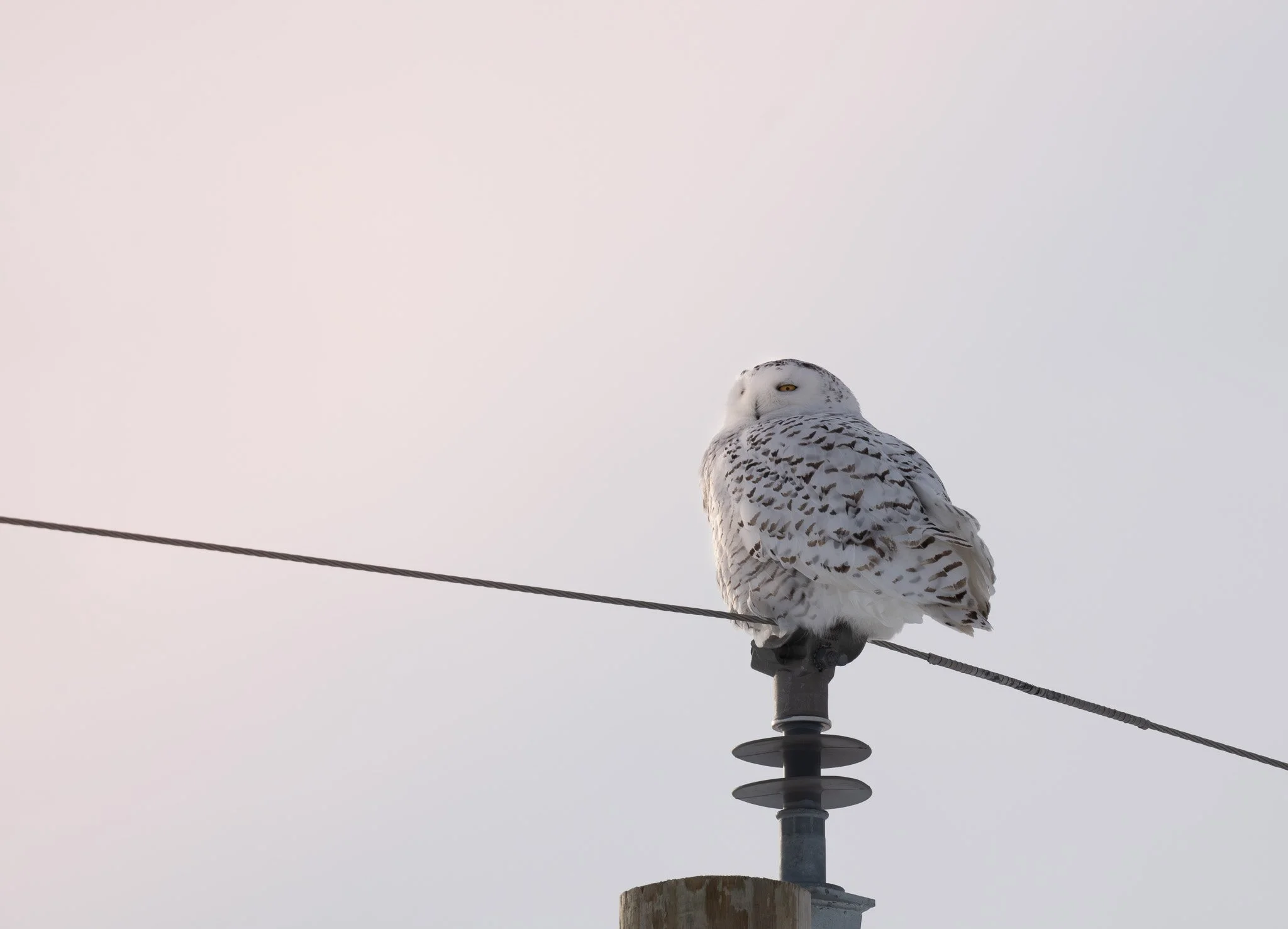
Beautiful female Snowy Owl observed with Michelle and her Dad.
I remember that first winter outing well. Snowy Owls are wonderful birds for teaching somebody how birding actually works because finding one is often less about knowing exactly where a bird is and more about learning how to see the landscape.
At first everything is white: snowbanks, fields, fenceposts, rocks, drifts. Then you start understanding that an owl’s white is not quite the same white. There is a shape to it, a texture, sometimes an almost imperceptible interruption in the landscape. You scan a hillside once and see nothing, then again, and then something changes. There it is. Once you see it, it suddenly seems obvious.
That transformation from invisible to unmistakable is one of my favourite experiences in birding, but what I remember most from that outing is not simply that we found a Snowy Owl. It is her dad seeing it.
Guiding gives you a strange privilege. You sometimes get to stand beside someone during the exact moment a bird moves from something they have hoped to see into a real animal sitting in front of them. That reaction never gets particularly old. A beautiful male Snowy Owl on an Ontario winter hillside is difficult to beat, but watching someone finally see an owl they had spent years hoping to find is better. That is a large part of why I enjoy doing this.
Has birding changed the way you see familiar places?
This may be the question that interests me most. Anyone can travel somewhere spectacular and be impressed by nature. What fascinates me is what happens afterward. Do you notice more when you get home? Does the roadside look different? Does winter feel different? Does that ordinary patch of forest suddenly seem worth exploring?
Michelle wrote:
“Finding new birds is always kind of a jolt to expectations. You might have some sort of idea of where they’re going to be, how you’re going to go find them, how you’re going to actually see them; and somehow it’s always just a little bit different. Plain sight for experienced eyes, but a door opened wide for an amateur’s!
One wild thing is just how much there is to explore in areas you might have already been through. The world is constantly changing and there is always more to nature that you can dig into. Sometimes that’s through another person. Even in the “dead” of a harsh Canadian winter, all sorts of critters are thriving. Learning this made winter feel less lonely. Taking a tour like this will make you realize just how much there is going on right under your nose!”
“Learning this made winter feel less lonely.”
That sentence has stuck with me.
We talk about winter almost entirely in terms of what leaves. Warblers disappear. Most insects vanish from view. Wetlands freeze. Trees lose their leaves. The chorus of spring and summer becomes quiet. But winter is certainly not lifeless. It is simply different.
Snow Buntings tumble across agricultural fields. Rough-legged Hawks arrive from the Arctic. Goldeneyes and mergansers collect wherever moving water remains open. Owls move through farm country. Woodpeckers become considerably easier to find. Tiny kinglets somehow continue existing despite weighing almost nothing and living in temperatures that make most of us reluctant to walk from the house to the car.
Once you learn what to look for, winter is no longer an empty season.
That is something I think about frequently when guiding. I obviously want people to see birds, but simply pointing at birds is not particularly interesting to me. I want someone to understand why we looked there, why that habitat matters, why that bird is here at this time of year, what sound gave it away, and what tiny clue separated it from everything else.
Because eventually I am not going to be standing beside them.
I would much rather have someone leave an outing knowing how to find their next bird than simply remembering the ones I found for them.
What would you tell someone considering their first guided birding experience?
I often ask participants some version of this because people who are new to birding frequently assume they need to reach some imaginary level of competence before joining other birders. They worry they do not know enough, that they will ask a stupid question, that everyone else will recognize things instantly, or that they somehow need to practise birding before they are allowed to go birding.
They do not.
Michelle had already spent time birding before we first went out together, but had not spent much time in the field with more experienced birders. Here is what she would tell someone considering it:
“I would highly recommend doing a birding tour with Avitura, no matter your skill level! Their genuine love for their roles as guides fosters such a sweet connection to nature, and their passion inevitably wears off on you. You get to be immersed in the moment while also having someone point out the things you might have missed.
I wasn’t new to birding, but I hadn’t really gone with anyone experienced until I took a chance and did the winter birding tour with my dad. It was nice to finally see where I was falling short in my understanding, and to finally meet some local birders. Brett has been helping me fill out my life list, which I am super grateful for!
If you’re completely new to birding but want to try it out, an Avitura tour is the perfect stepping stone into the hobby. It can feel daunting when you find out how much there is to learn, but when you have experienced people helping you in the right direction, you’ll make so much progress! There will always be so much to discover about what’s around you!
Oh, and bring appropriate clothing and footwear!”
I cannot really argue with that last point. Especially in Ontario. Bring good footwear, or, if you are crazy like me, just wear some Crocs.
One of my favourite examples of what Michelle is describing came on another outing when we set off in search of Barred Owls, a bird she had especially wanted to see. Part of what I remember so clearly is the walk itself: heading into the woods, listening carefully, scanning through the trees and knowing that, somewhere along the way, we might finally find the bird she had been hoping for. When we did, her excitement was immediate and completely genuine. That reaction is still one of my favourite memories from guiding her.
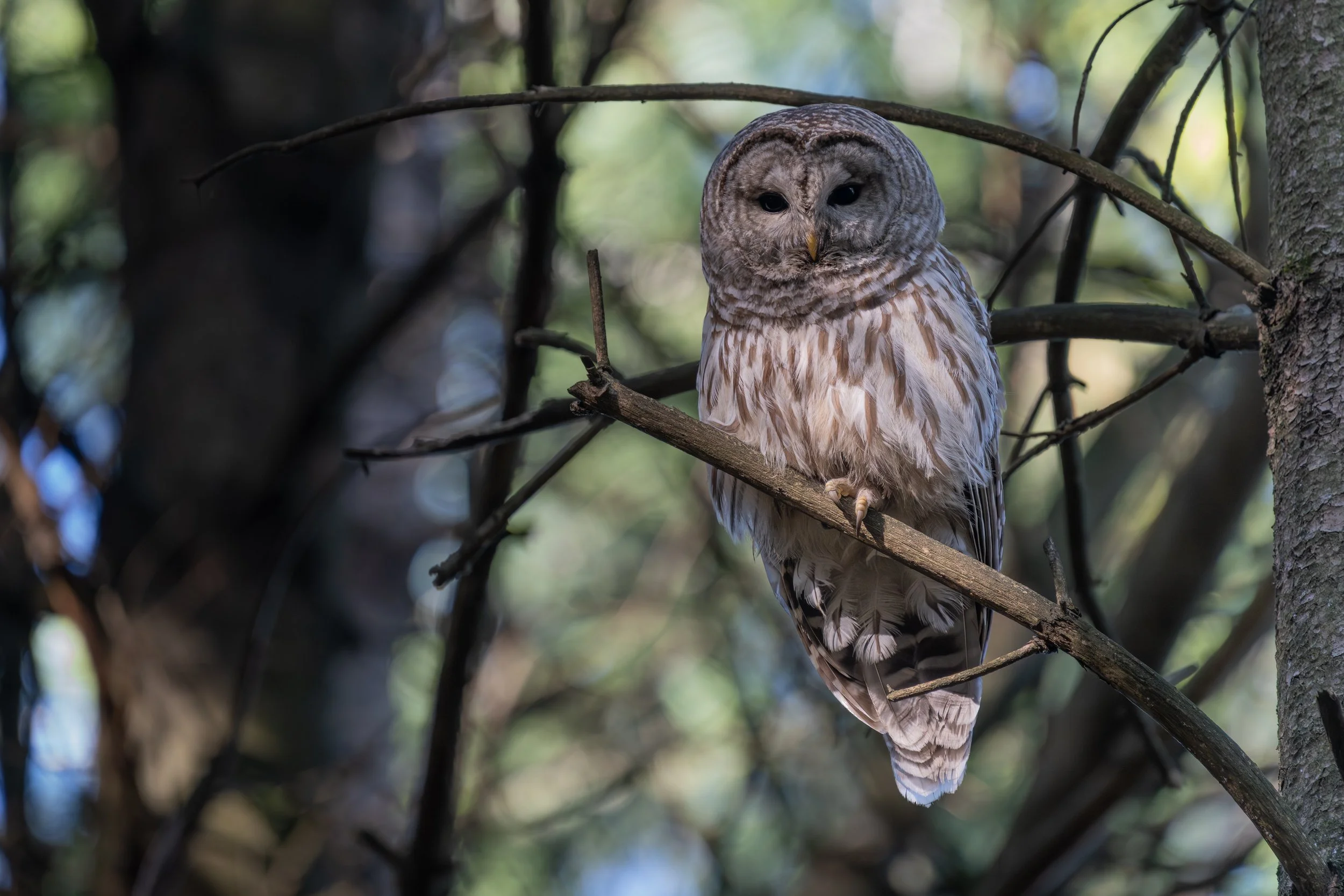
Barred Owl watched us quietly and close, while simultaneously scanning the forest floor for prey.
The bird itself was wonderful, of course, but seeing what that moment meant to Michelle was better. Genuinely, that is one of the best parts of guiding for me. I still love finding birds, chasing something unusual, adding species to a day list and seeing a bird I have not encountered in a long time. But getting to share that moment when someone finally sees a bird they have wanted for years adds something entirely different to the experience.
That is also why I do not think guided birding should be about demonstrating how much the guide knows. The goal is not to make someone feel like they are behind. It is to bring them into the process: why we are looking in a particular place, what we are listening for, what habitat might hold something interesting, and how to recognize the little clues that become obvious only after somebody has pointed them out once or twice.
There is something else running through all of Michelle’s answers that gets very close to what I want Avitura to be. Of course we go looking for birds. Life lists are fun. Rare birds are exciting. Finding something you have spent years hoping to see is one of the great pleasures of birding, and I still experience that excitement myself. But I do not think accumulating names is the most interesting thing birding gives us. The more important change happens in all the places between those birds.
A creek beside your grandparents’ place becomes somewhere Red-winged Blackbirds sing their bizarre, yet wonderful songs. A feeder on your father’s farm becomes the place where Red-headed Woodpeckers help push a growing interest toward something that will follow you for the rest of your life. A frozen agricultural field becomes habitat for an owl from the Arctic. A walk through the woods becomes the journey toward a Barred Owl that somebody has dreamed about seeing. A quiet stand of trees becomes several individual voices. A harsh Ontario winter starts feeling a little less empty, and a place you have driven past a hundred times can suddenly become somewhere worth exploring.
That is the part of birding I hope people carry home with them. Not simply the list from that morning, not simply the photograph, and not even necessarily the bird we were most excited to find. I hope something changes in the way they look, and that the next time they are outside, they notice one more sound, one more movement, or one more possibility than they would have before.
Because the extraordinary part of nature is that so much of it is not actually hidden. It has been there all along.
Sometimes we simply need somebody beside us to say, “Look there.”
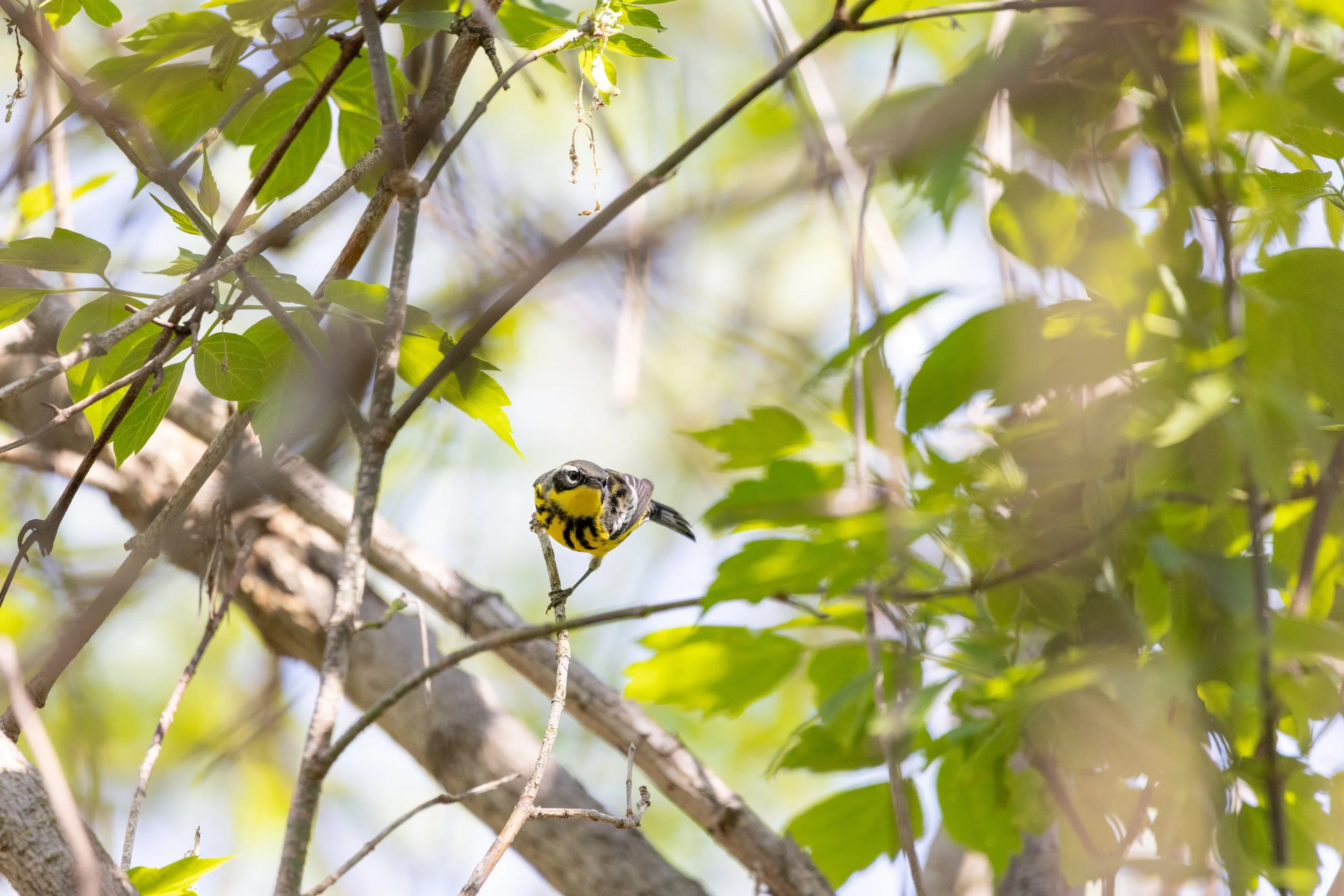
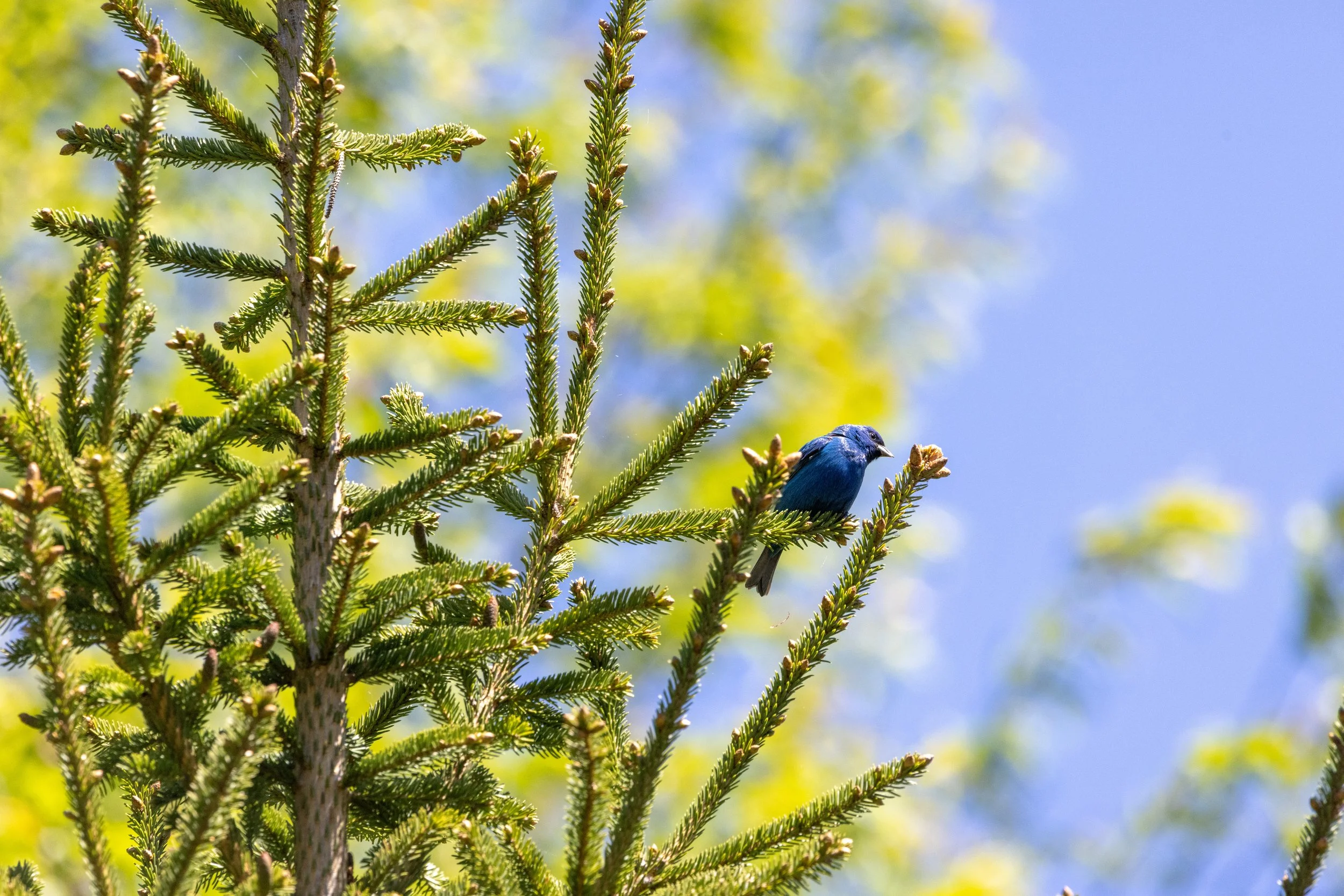
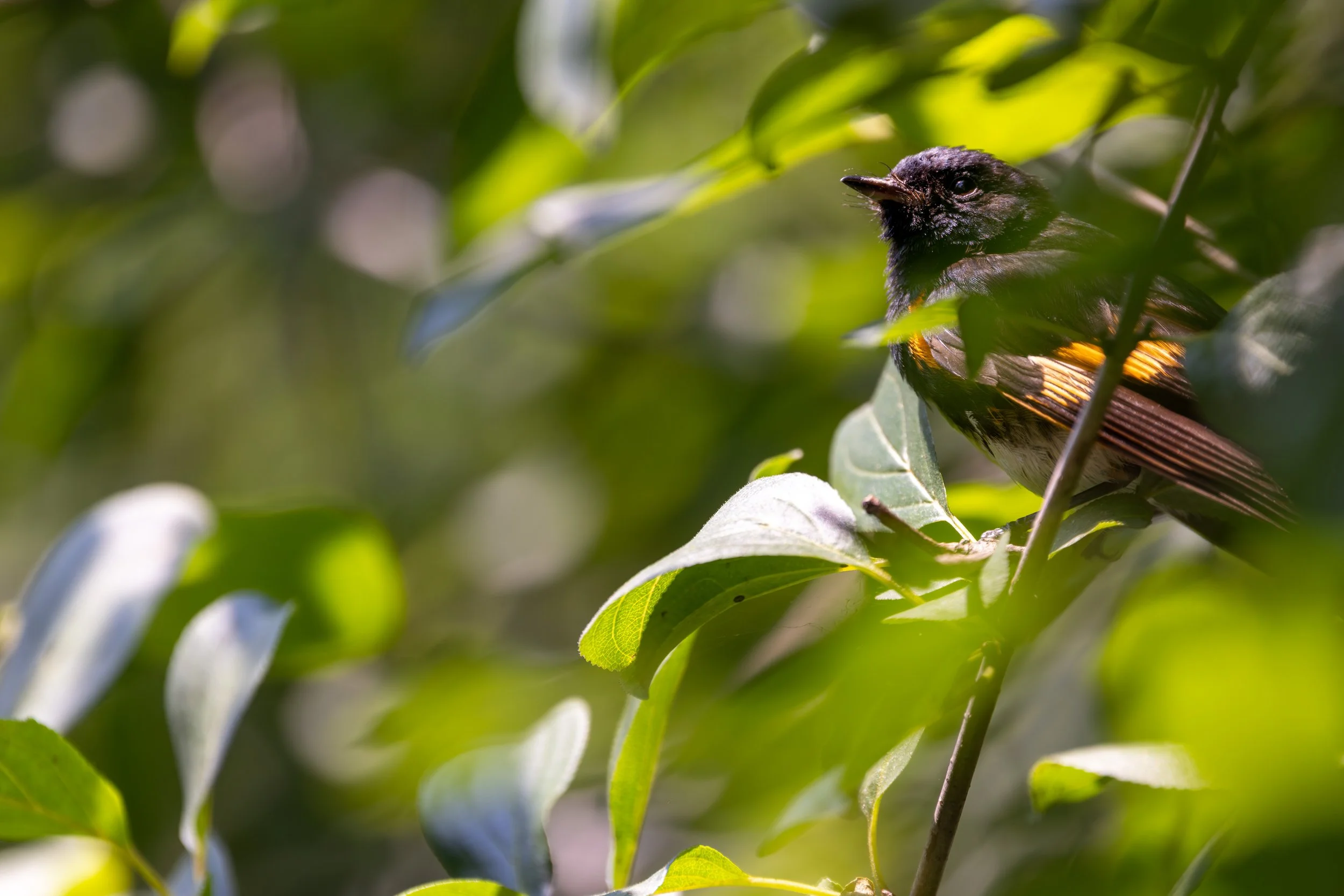
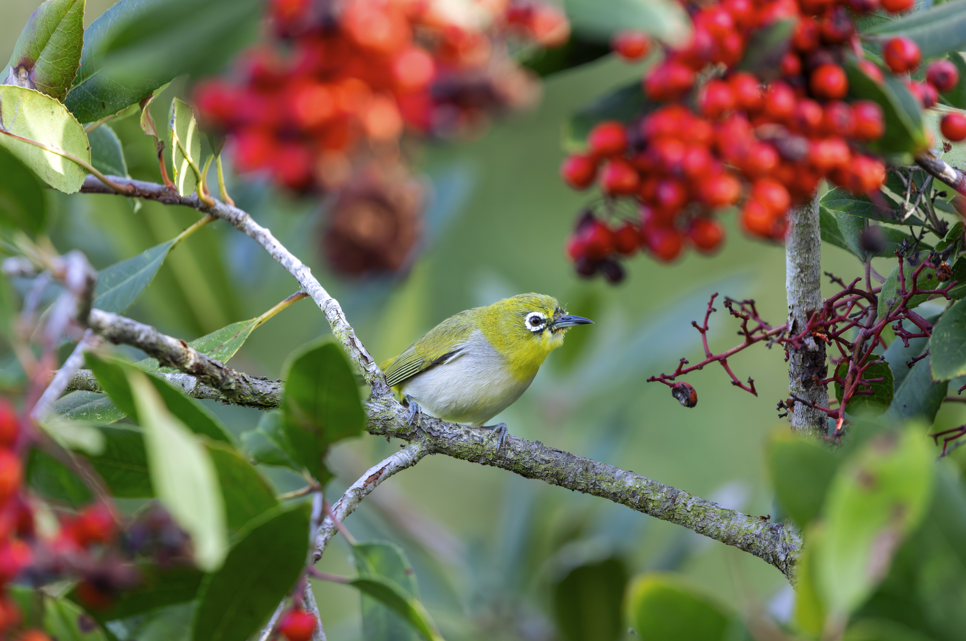
Photos by Michelle Toth, reflecting the curiosity and attention to detail that continue to shape her growing passion for birding.
